

E-Mobility & Battery Pack Assembly
A battery pack is only as safe as its weakest connection.
Modules and packs bring hundreds of cells, busbars and sensing lines into one high-voltage assembly. A weak weld can increase electrical resistance, generate local heat and compromise pack reliability and safety.
Volumes are rising while cell formats keep changing. We build assembly systems that measure and match cells using defined electrical parameters, place and weld them under process monitoring, and test every module before it moves on. Every weld recorded. Every cell traceable.
From raw body to finished assembly.
One team answers for all of it.
Cell Matching
Cells are measured and matched using defined electrical parameters before they enter the module.
Process Control
Busbar welds are monitored and inspected so weak joints can be detected before pack assembly.
Flexibility
Modular stations adapt to new cell formats and module layouts without a new line.
Safety
Electrical tests and insulation checks run on every module before it moves on.
We deliver the system.
You operate it.
High Speed Assembly & Inspection Cells
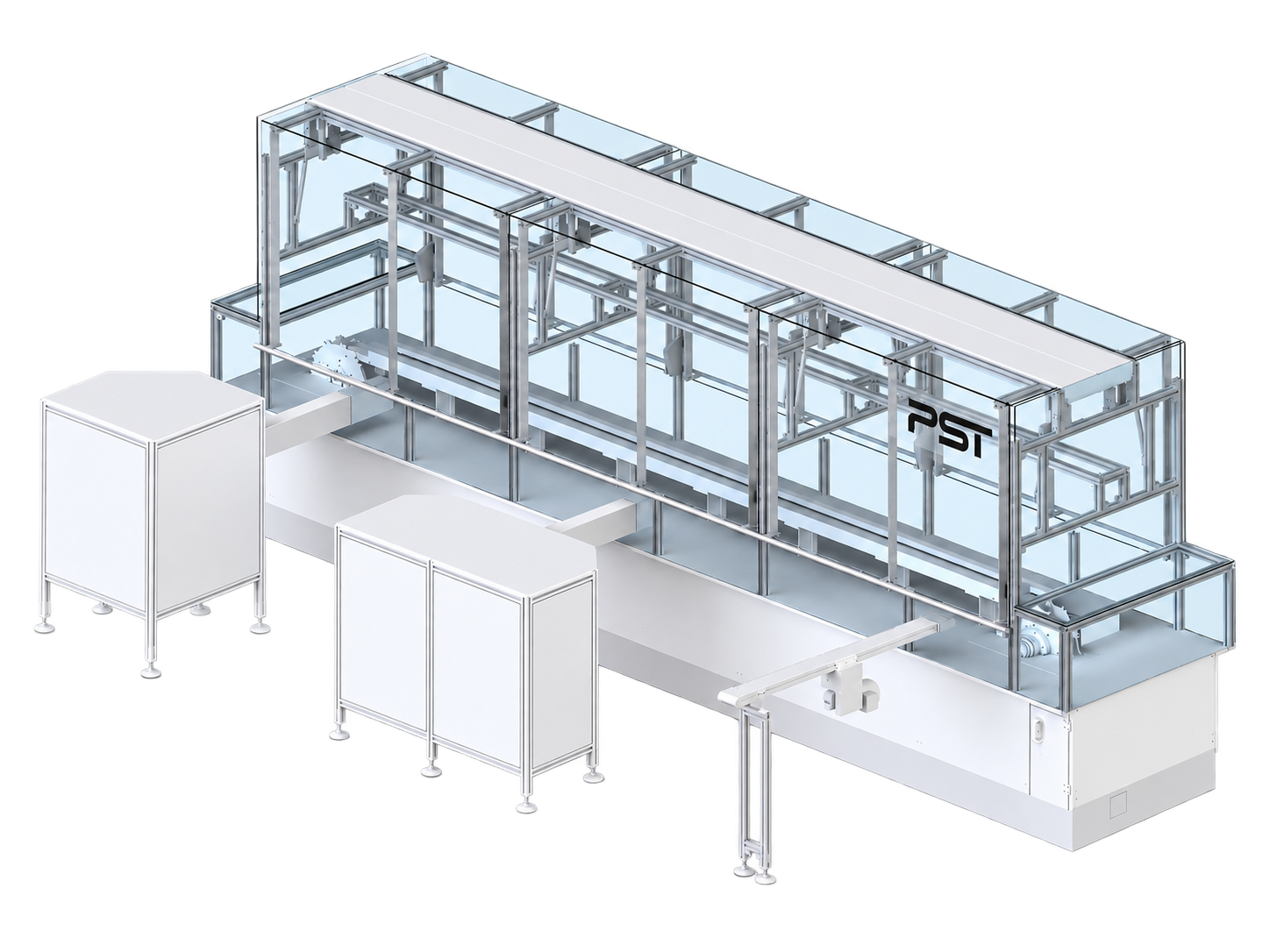
Transfer Solution
A battery module is a long chain of steps, and every link has to hold. The Transfer Solution is our linear assembly system for process chains of that length, built on a rugged welded base frame. Station movements and chain indexing run in exact synchronization, driven mechanically by hardened cams. That coupling delivers the repeatability long, demanding assembly sequences require. For assemblies with few individual parts there is the compact Modular Solution, for more stations around one central drive OKUMAT.
Discover all High Speed Assembly Systems

Up to 300 parts a minute, and every one of them exactly where it belongs. Explore the high-speed assembly systems that turn many small components into finished products at a pace most lines never reach.

Downloads
We send datasheets and technical documentation on request.
Custom Solutions & Retrofit
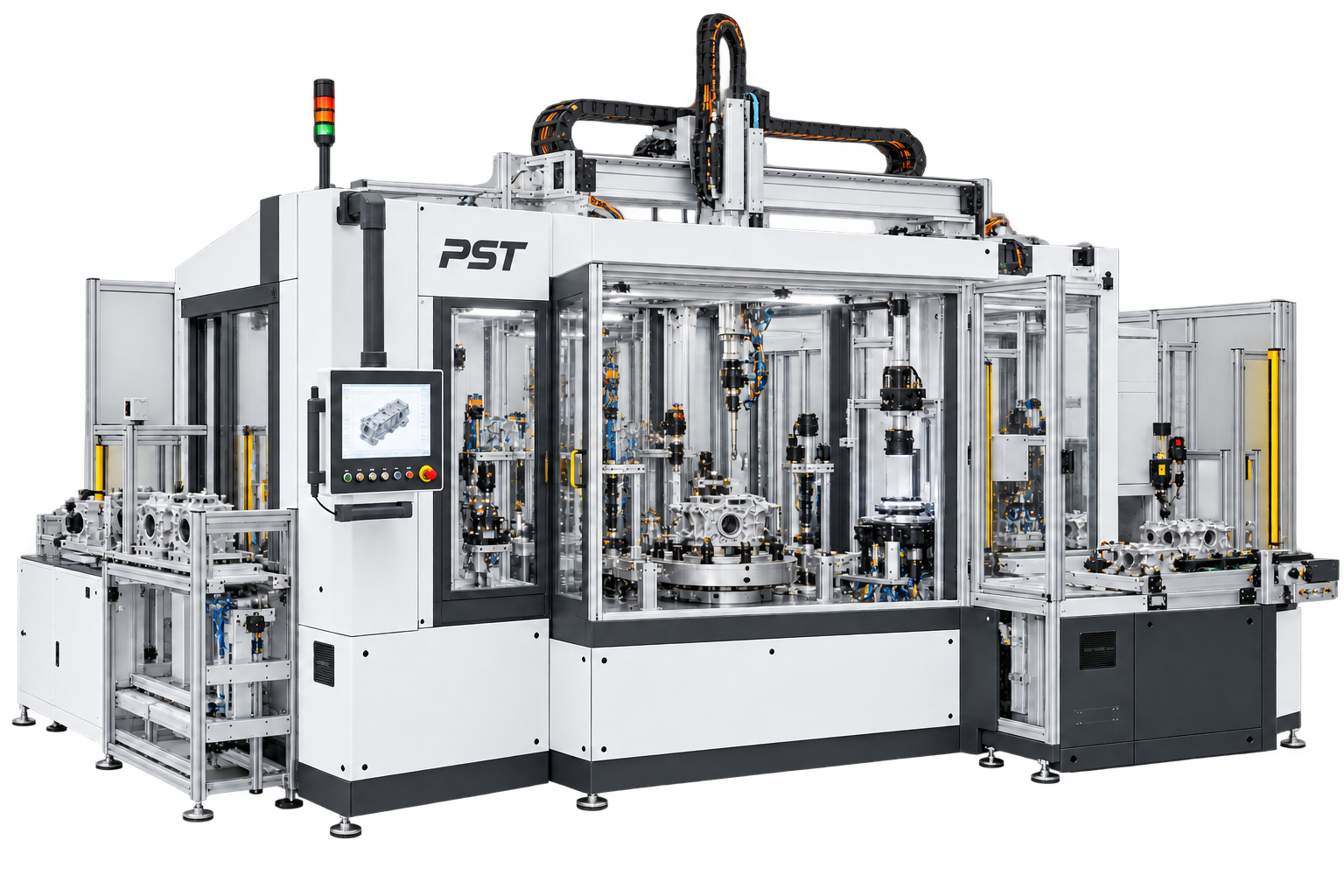
Custom Machines
Cell formats keep changing, and a battery line has to keep up. When no standard machine fits the module you build, we start with the concept, work through the material flow layout and the control concept, and end with a machine cut to your product and your process. Proven building blocks such as axis modules and automation components keep even a one-off machine highly available. If a proven platform can carry your process, see System Solutions.
Discover Custom Solutions & Retrofit
Your process is not in a catalog, and your machine should not be either. Explore how we build, extend and modernize production systems around what you make, from the first sketch to the last shift.
Downloads
We send datasheets and technical documentation on request.
One team from first sketch to a line that runs.
A process that has proven itself. One team plans, engineers and commissions your machine, and hands it over turnkey, ready to run, in the shortest possible time.

Planning
Concept, material flow and scope, defined with you before the first drawing is released.

Engineering
Mechanics, controls and process, designed as one system and simulated before the build.
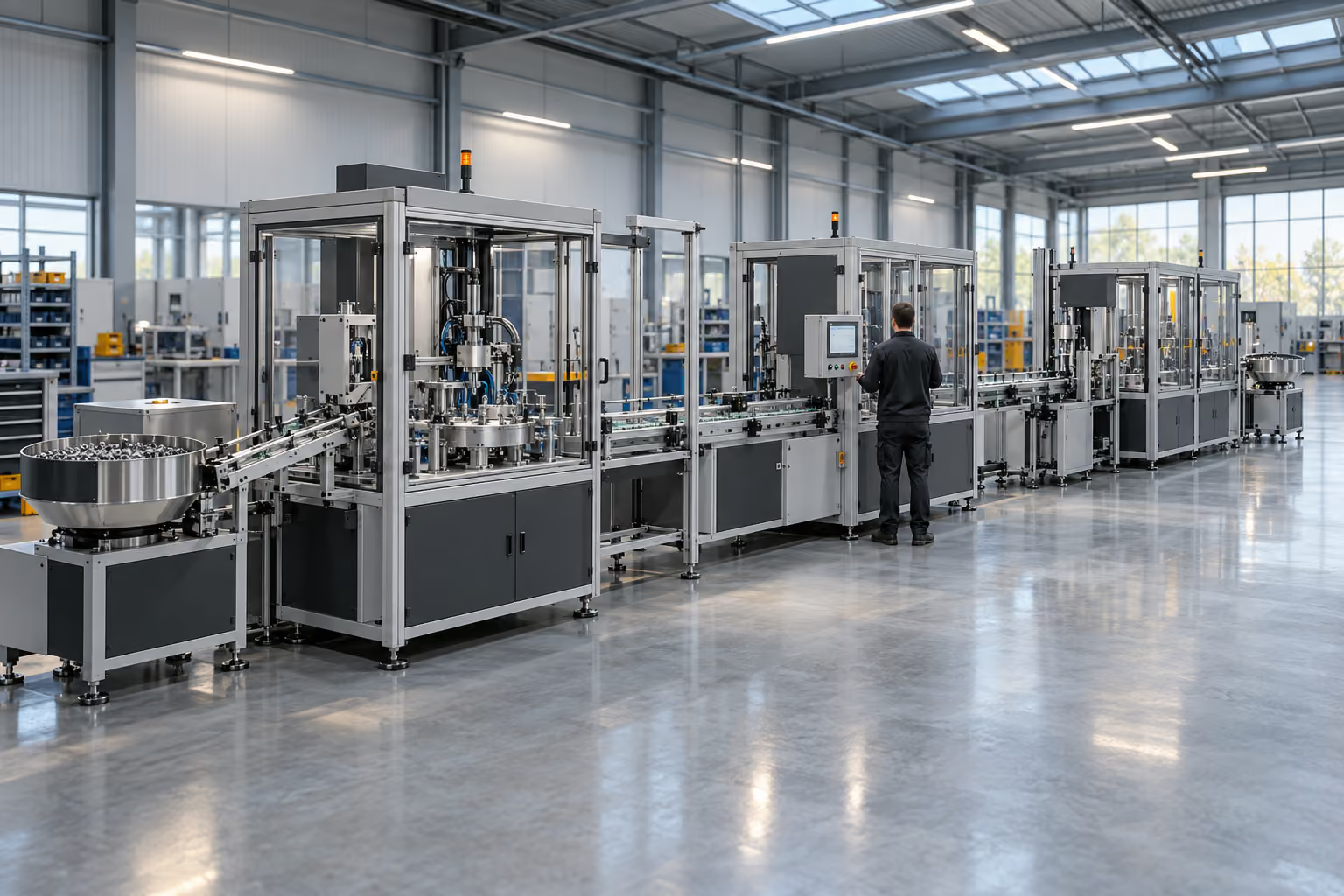
Realization
Build, installation and commissioning at your plant, then handed over ready to run.
Frequently Asked Questions
When do you recommend a custom machine?
When no standard platform fits your part, your process or your cycle time. Often these are the processes that set a manufacturer apart from the competition.
Can one system combine assembly, machining and robots?
Yes. Hybrid systems combine assembly modules, NC tables and robots. They process different workpieces on one line and can be expanded in stages.
Can stations be added to a Transfer Solution later?
Yes. The welded base frame can be planned with reserve positions, so new process steps are added without rebuilding the machine.
Still have questions? Get in touch with our support team and we'll
discuss your unique requirements.
How do you reduce the risk of a one-off machine?
We build from proven modules such as axis units, machining units and automation components. Critical processes are simulated and trialed before the build, so a one-off machine still reaches series availability.
What traceability do you provide?
Every part and batch is documented through the process: which station, which parameters, which result. Traceability is configured to your requirements, down to part and batch level.
Can our MES receive the production data?
Yes. Process data, results and serial numbers are available through OPC UA as standard. Other protocols and direct MES interfaces are configured to your IT landscape.
Which interfaces do you support?
OPC UA as standard, plus PROFINET, MQTT and direct database or MES interfaces. Data structures are agreed with your IT and quality teams during planning.
Are your machines CE marked?
Yes. Every machine for the European market is built on a documented risk assessment and ships with CE marking and a declaration of conformity. From January 20, 2027, this follows the new EU Machinery Regulation 2023/1230. For North America, we build to the applicable electrical and safety standards on request.
Still have questions? Get in touch with our support team and we'll
discuss your unique requirements.
Can you test our parts before we place an order?
Yes. For critical joining, machining or inspection steps, we run feasibility trials with your sample parts. You see the result before you commit to the machine.
How long does a project take from order to acceptance?
Systems based on our standard platforms typically take six to nine months. Complex lines with machining, assembly and inspection take nine to fourteen months. The binding schedule is part of every offer.
What do you need from us to prepare an offer?
Part drawings or CAD data, annual volume, target cycle time, number of variants and your quality requirements. Sample parts help. With this, you receive a technical concept and budget price within two to three weeks.
Still have questions? Get in touch with our support team and we'll
discuss your unique requirements.


Process System Technologies
Anton-Grimmer-Straße 4
73466 Lauchheim
Germany


