
High-Speed Assembly
and Testing Machines
PST continues to build the OKU systems that run in plants around the world, using the same technology and the same engineering expertise. From a compact module to a long transfer line, each system takes your part and your process as its starting point and holds its cycle times in industries where speed and precision allow no compromise.

We build each system on a rigid base structure that keeps maintenance low and supports reliable production in continuous operation over many years.

Our systems match the cycle time of your line, from 10 to 1850 parts per minute at a repeatability below 0.05 mm, depending on the model.

We combine standardized modules, from rotary indexing to continuous lines. Reusing proven parts shortens delivery and cuts the cost of custom designs.

Working principle
At the core of each OKU system.
OKUMAT modular system
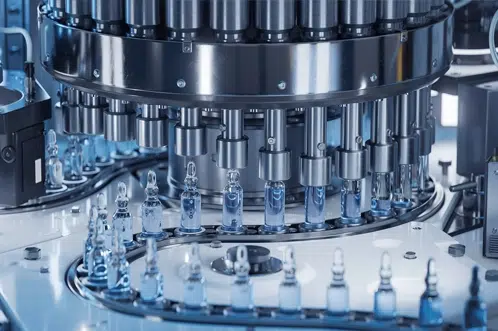
A central drive powers all stations of an OKUMAT system, and its modules work on the principle of cam control. They combine flexibly, from rotary indexing to continuous production, and our engineers adapt each station to the product and its assembly processes. Proven units give even custom systems a base tested in service.
Feeding & testing
Our engineers integrate additional processes such as welding or camera inspection. Suitable feeding systems extend the assembly system to a comprehensive solution and deliver even sensitive parts with care, in the correct orientation and at high cycle rates.
We deliver the system.
You operate it.
High Speed Assembly & Inspection Cells
OKUMAT
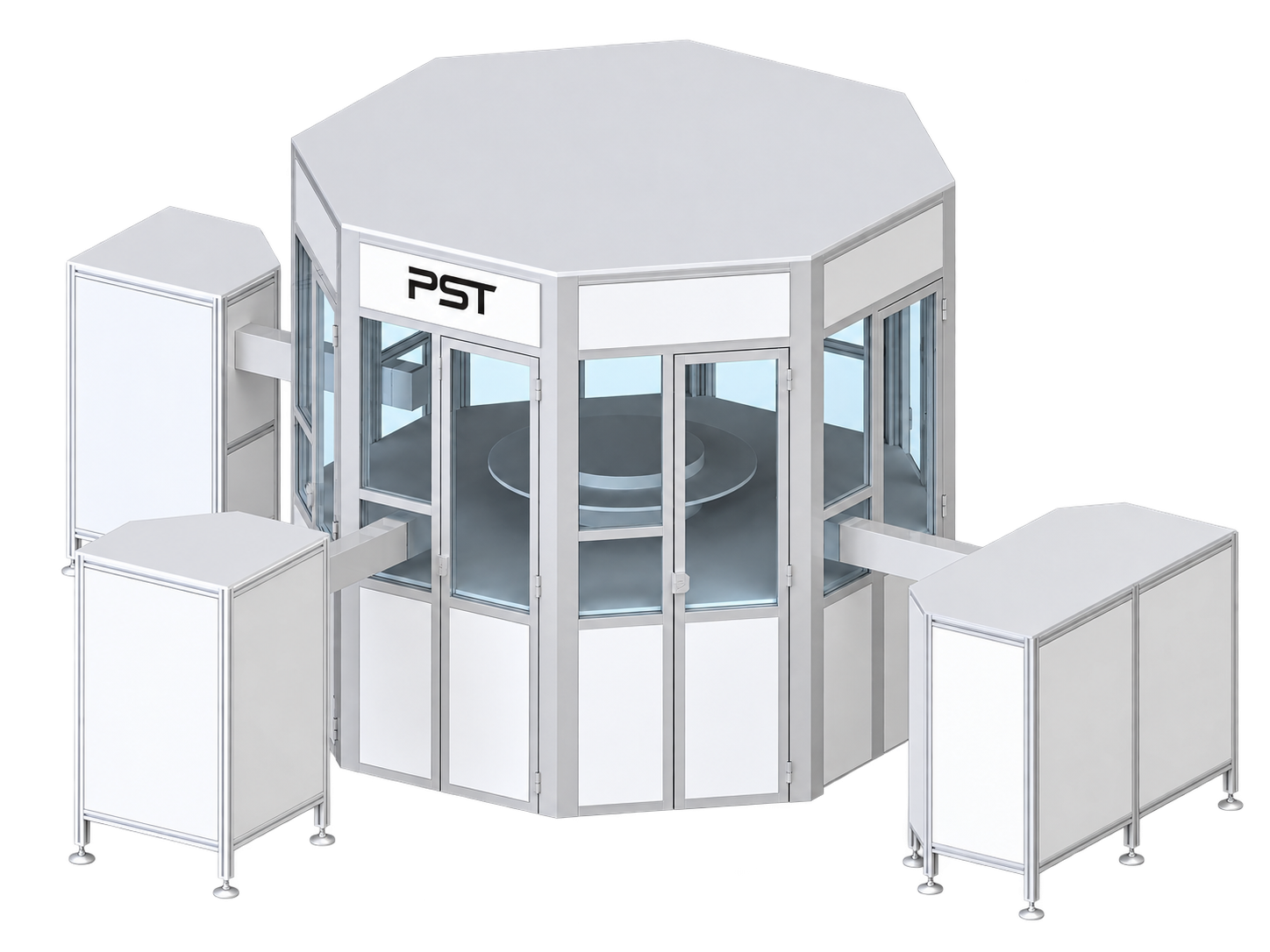
One drive. Up to 24 stations. OKUMAT is the modular base unit behind our high-speed assembly systems. Pick one of three centrally driven bases, then arrange 8, 12, 16 or 24 stations around it to fit your part and your process. Cams set the motion, so every cycle repeats like the last. Depending on the system, output runs from 10 to 300 parts per minute at a repeatability below 0.05 mm. Easily exchangeable components keep engineering fast and the system economical.
Downloads

We send datasheets and technical documentation on request.
Modular Solution
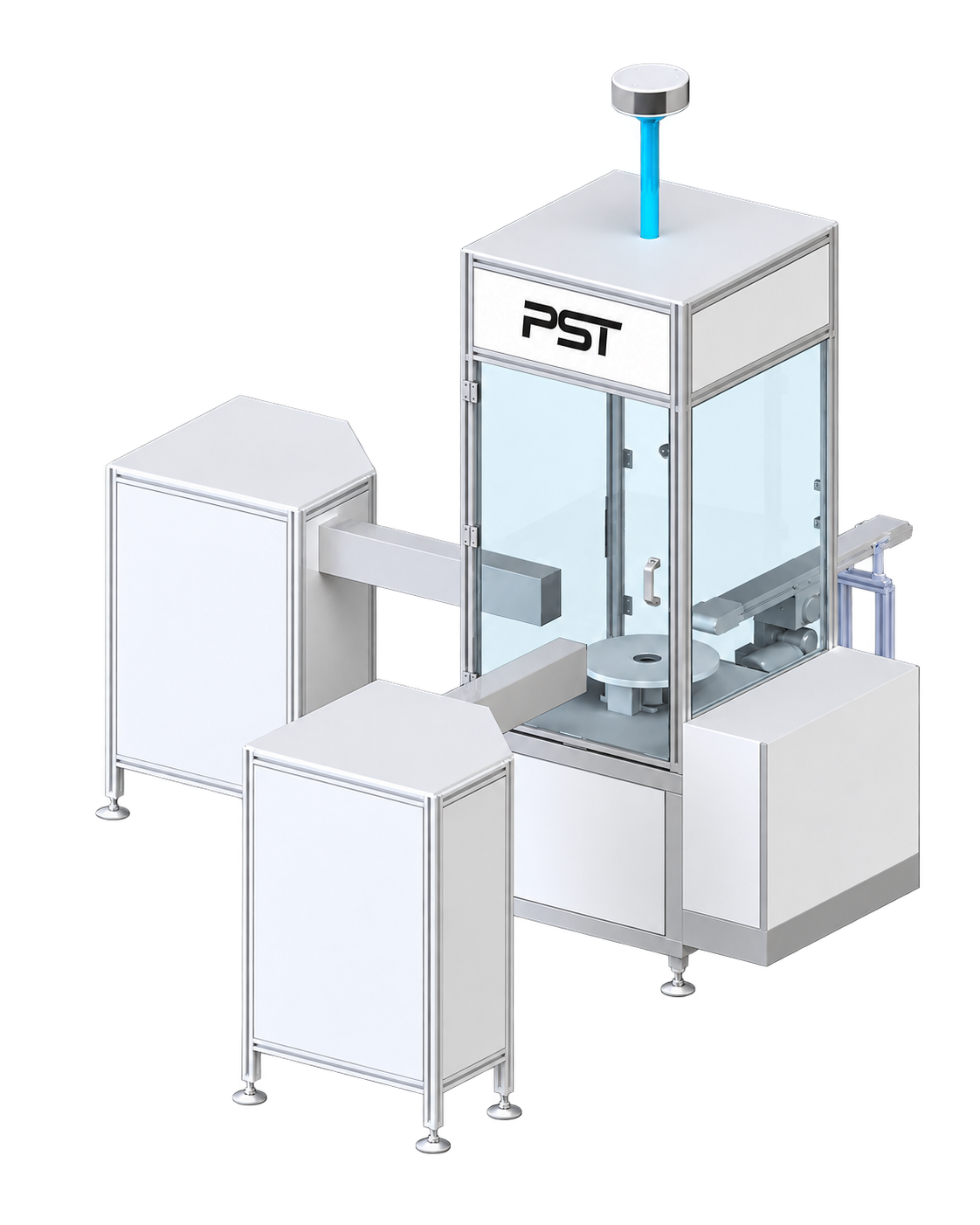
Small footprint, full process. The Modular Solution is built for assemblies with few individual parts. Its compact frame drops into an existing production line, and cam-driven handling places each part exactly where it belongs. A small rotary indexing table adds room for further steps such as welding or camera inspection, so assembly and checking happen in one system.
Downloads
We send datasheets and technical documentation on request.
Transfer Solution
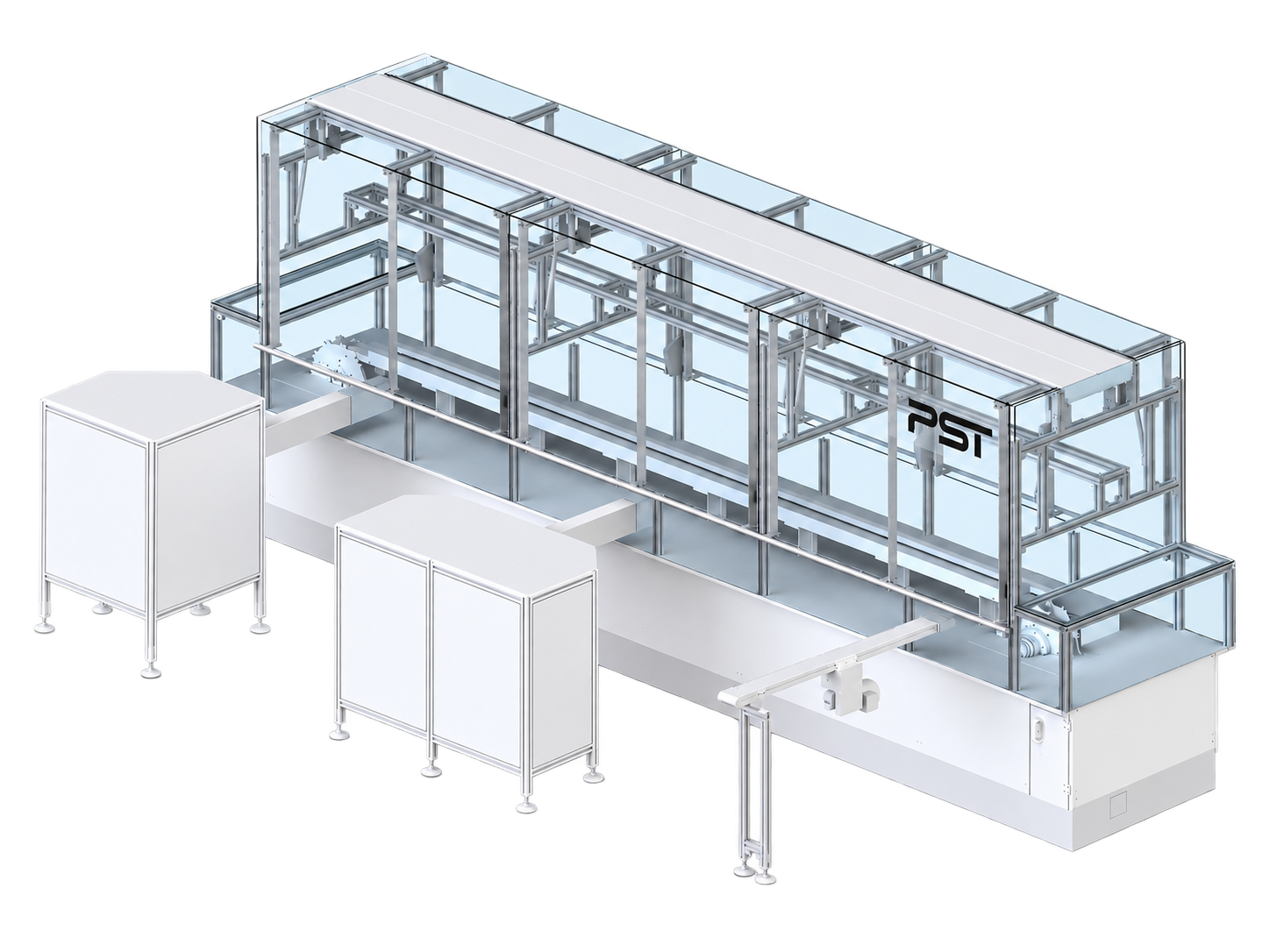
Long process chains need a straight line. The Transfer Solution is our linear assembly system, built on a rugged welded base frame. Station movements and chain indexing run in exact synchronization, driven mechanically by hardened cams. That coupling delivers the repeatability that long, demanding assembly sequences require.
Downloads
We send datasheets and technical documentation on request.
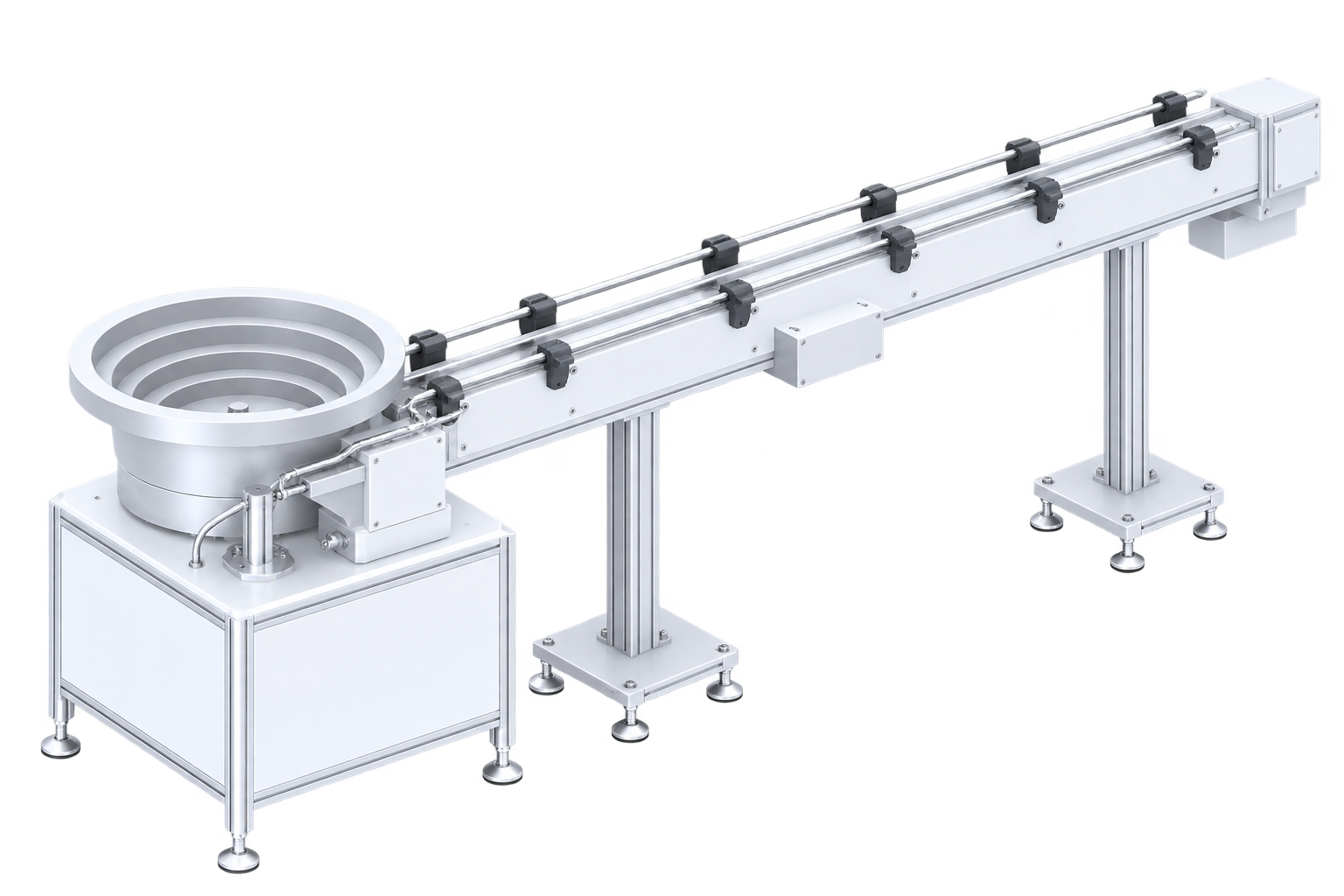
Feeding System
A line is only as fast as its feed. Our feeding systems deliver even delicate parts gently, correctly oriented and exactly on cycle, at high rates. Protective coatings guard the part surface, and a simple connection to existing infrastructure gets production running quickly. Available as an option for every high-speed assembly system we build.
Downloads
We send datasheets and technical documentation on request.
Built for demanding production.
Defense & Security
01
We engineer assembly and machining systems for ammunition and fuze production, where speed and precision allow no compromise.
Ammunition Assembly
Fuze & Initiator Assembly
Projectile & Component Machining

More information
Consumer Goods
02
Dispensers, closures, razors and pens require high-volume production of small components. Our high-speed assembly and inspection systems ensure high output, consistent quality and minimal rejects.
Dispensing & Closure Assembly
Variant & Format Flexibility
Inline Inspection & Tes
More information
Talk to Our Engineers
Contact
We build for all industries. Tell us about your part and your process.
Frequently Asked Questions
Which feeding technologies do you use?
Vibratory bowl feeders, linear and step feeders, and flexible feeders with vision for complex parts. The technology is chosen by part geometry, surface and rate.
When is a linear transfer system better than a rotary one?
When the process chain is long, the part is large or many stations are needed. A linear layout gives each station space and access, and leaves room to add steps later.
When is the Modular Solution the right choice?
For assemblies with few individual parts that need a compact, fast and reliable machine. It covers the full process in a small footprint.
Which processes can run on an OKUMAT?
Press-fitting, screwing, crimping, riveting, welding, dispensing, marking, camera inspection and leak or function testing. Assembly and verification run on the same machine, in the same cycle.
How many stations can an OKUMAT carry?
8, 12, 16 or 24 stations, arranged around one of three centrally driven base units. The base unit is chosen to fit the part and the process sequence.
What output can an OKUMAT system reach?
Between 10 and 300 parts per minute, depending on part size, number of components and process. The exact rate is set by the slowest process, so we design every station to match the target cycle.
Still have questions? Get in touch with our support team and we'll
discuss your unique requirements.
Can you feed delicate or coated parts?
Yes. Protective coatings in the feeder protect sensitive surfaces, and the parts arrive gently, correctly oriented and on cycle.
How do the stations of a Transfer Solution stay synchronized?
Station movements and chain indexing are driven mechanically by hardened cams. That coupling delivers the repeatability long assembly sequences require.
Can the Modular Solution inspect as well as assemble?
Yes. A small rotary indexing table adds room for further steps such as welding or camera inspection, so the part leaves the machine assembled and checked.
Why use cam-driven motion instead of servo axes?
Cams couple every station mechanically to one drive. Each cycle repeats exactly, even at high rates, with a repeatability below 50 µm. Where a process needs flexible motion, we add servo axes at that station.
Can our MES receive the production data?
Yes. Process data, results and serial numbers are available through OPC UA as standard. Other protocols and direct MES interfaces are configured to your IT landscape.
How is every unit verified?
Inspection is part of the process, not a step after it. Each unit is checked in the line, and the result is stored against the part. Nothing moves to the next station without a pass.
Still have questions? Get in touch with our support team and we'll
discuss your unique requirements.
What does turnkey mean in practice?
One contract, one responsible partner. We deliver the complete system including feeding, safety technology and controls, commission it on your floor and hand it over after acceptance, ready to produce.
Do you train our operators and maintenance teams?
Yes. Training is part of commissioning, on your machine and with your parts. Operators, setters and maintenance staff each get the training their role needs, backed by complete documentation.
How long are spare parts available?
Every machine ships with a spare parts list and a recommended stock for your site. We keep wear parts available and support our machines with spare parts for at least ten years.
Can you test our parts before we place an order?
Yes. For critical joining, machining or inspection steps, we run feasibility trials with your sample parts. You see the result before you commit to the machine.
What do you need from us to prepare an offer?
Part drawings or CAD data, annual volume, target cycle time, number of variants and your quality requirements. Sample parts help. With this, you receive a technical concept and budget price within two to three weeks.
How long does a project take from order to acceptance?
Systems based on our standard platforms typically take six to nine months. Complex lines with machining, assembly and inspection take nine to fourteen months. The binding schedule is part of every offer.
Still have questions? Get in touch with our support team and we'll
discuss your unique requirements.