
We build for industries where a single defective part carries real consequence. In defense, that standard is not negotiable.
Everything that follows is how we hold it, on every unit, every batch, every line we deliver.


Defense
& Security
A defective round still gets fired. A failed part still ships downrange. In defense, the cost of error is not a return, it is a life. We build the high-speed assembly and precision machining systems engineered to remove that risk.
We build for industries where a single defective part carries real consequence. In defense, that standard is not negotiable.
Everything that follows is how we hold it, on every unit, every batch, every line we deliver.
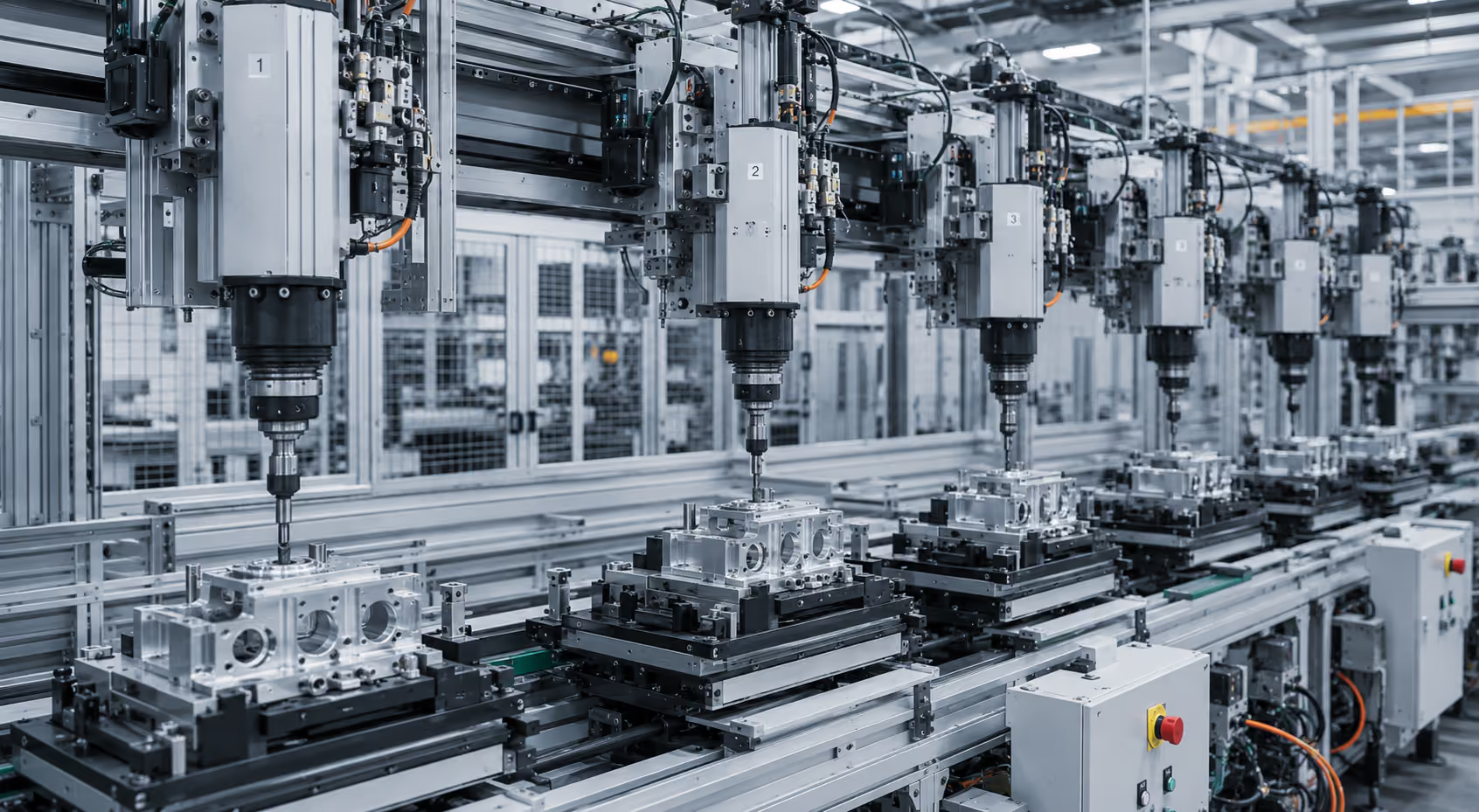
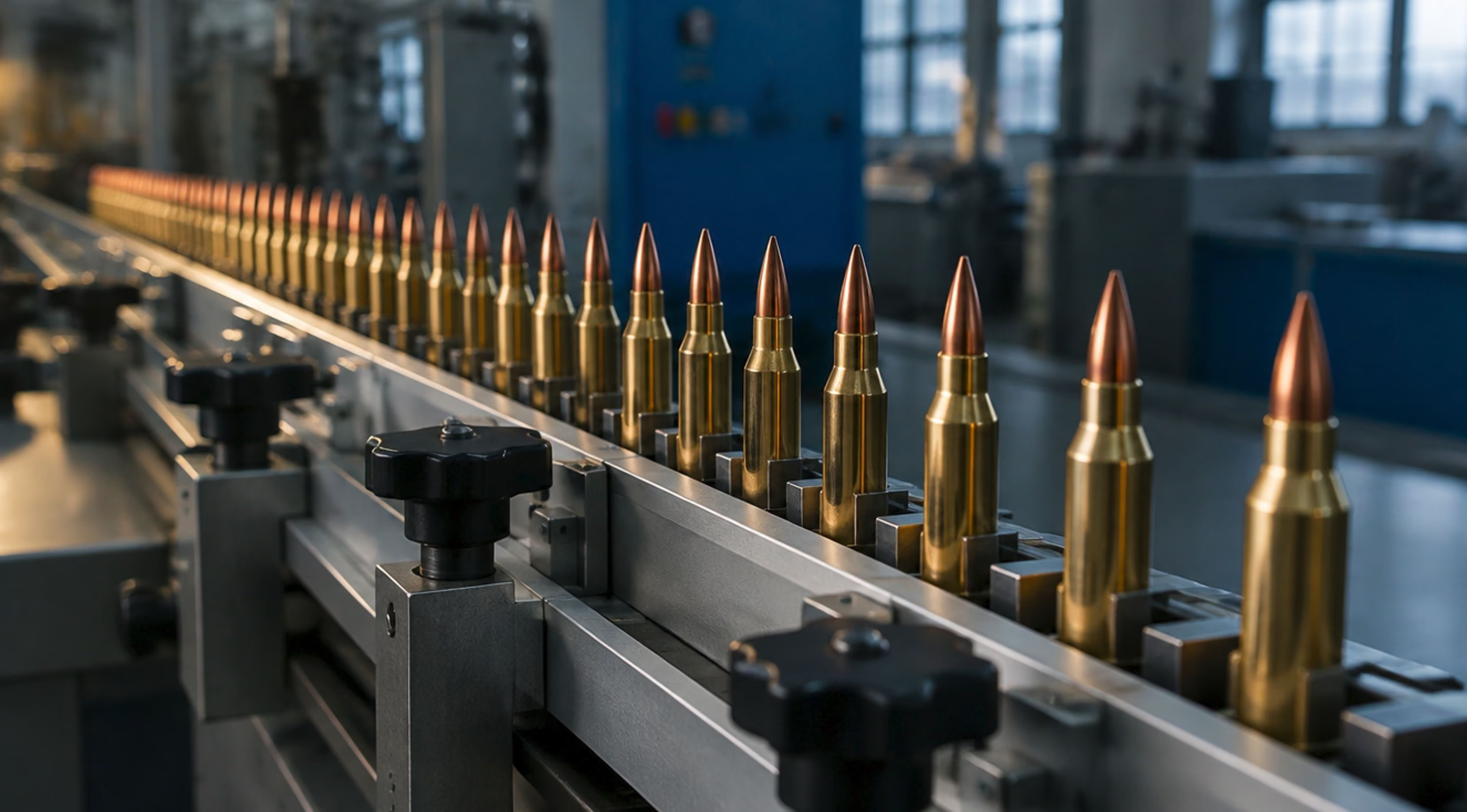
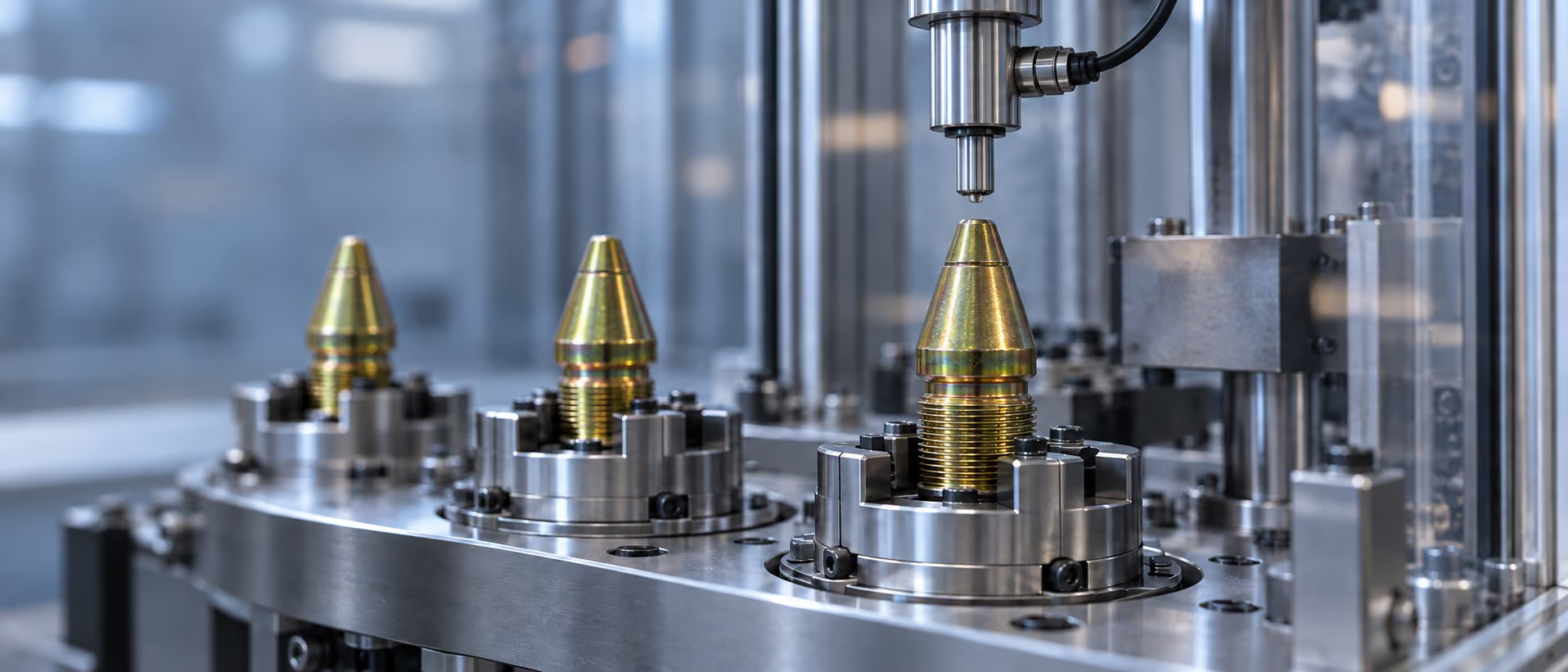

We deliver the system.
You operate it.
Built for precision where failure is not an option.
We design and build automation and precision manufacturing systems for industries where mistakes aren't an option. From high-speed assembly to precision machining, our production lines deliver full traceability.
One team from first sketch to a line that runs.
A process that has proven itself. One team plans, engineers and commissions your machine, and hands it over turnkey, ready to run, in the shortest possible time.

Concept, material flow and scope, defined with you before the first drawing is released.

Mechanics, controls and process, designed as one system and simulated before the build.
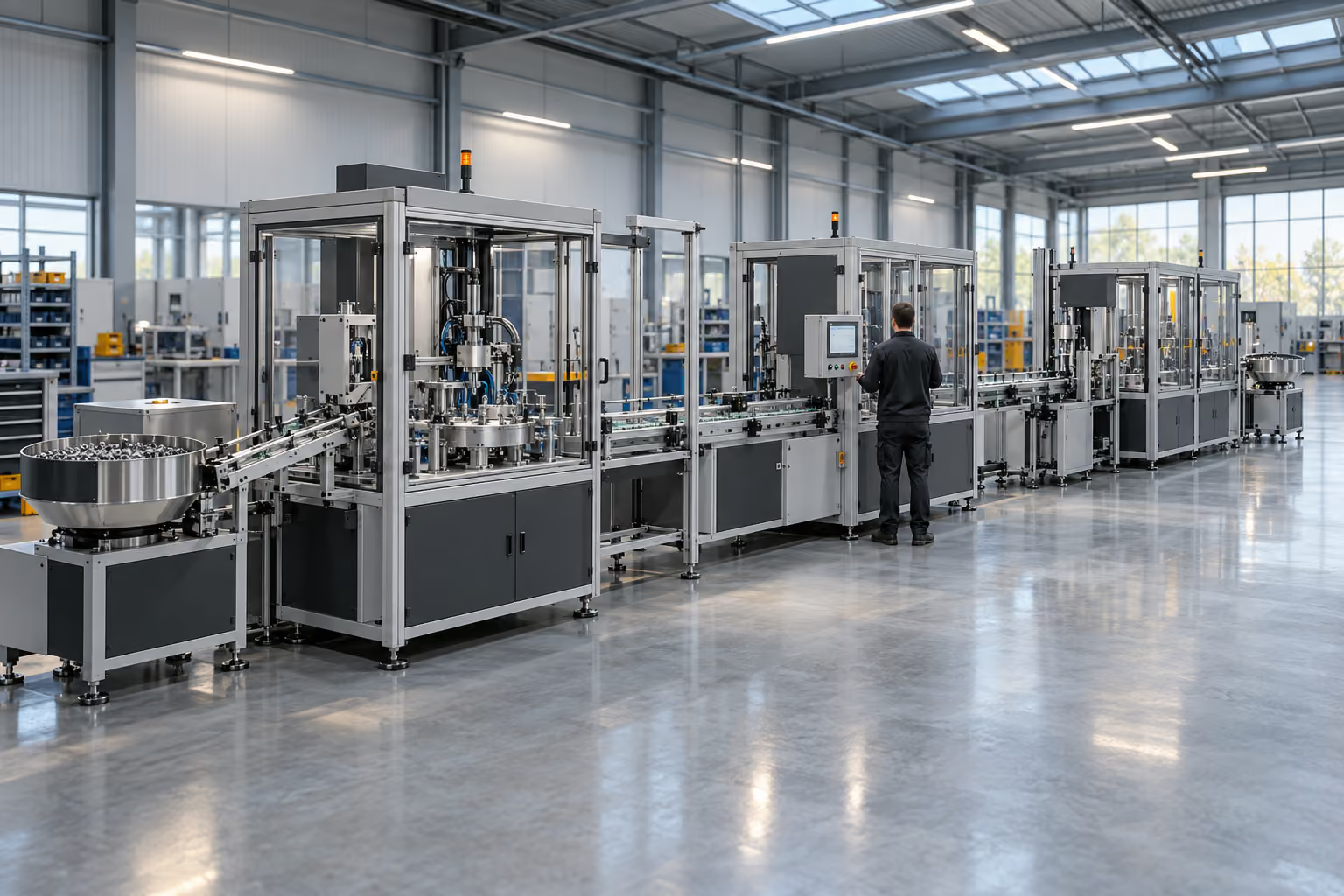
Build, installation and commissioning at your plant, then handed over ready to run.
Can robotic cells be added to an existing line?
Yes. Cells are self-contained units with their own safety concept. They connect to your existing conveyors and controls and can be installed in stages.
Can the cells handle the weight of large-caliber projectiles?
Yes. A 155 mm projectile weighs around 47 kg. Our cells use industrial robots with payload reserves well above that, gripper included, so parts are moved safely and precisely.
What do your robotic cells do?
They handle and assemble heavy, safety-critical parts where precision and protection matter more than speed. A typical application is the assembly of artillery projectiles.
Still have questions? Get in touch with our support team and we'll
discuss your unique requirements.
How do the cells protect people around heavy and energetic parts?
Operators stay outside the working area. Interlocked access, safety-rated speed and position monitoring and separated loading zones are designed to ISO 10218-2:2025 and ISO 13849-1. The robot works. People supervise.
How do you protect confidential projects?
Confidentiality starts before the first drawing: a non-disclosure agreement, access on a need-to-know basis and separated project areas in our facility. Your parts, data and drawings stay inside the project team.
How do you prove a machine meets spec before it ships?
In a factory acceptance test (FAT) at our plant, with your parts, at full rate. We document output, capability and reject handling. After installation, a site acceptance test (SAT) confirms the same results on your floor.
Which process capability do you design for?
Critical features are designed for a machine capability index (Cmk) of 1.67 or higher. We prove it in a documented capability study with your parts before the machine ships. Process capability (Cpk of 1.33 or higher) is then confirmed in series production on your floor.
What traceability do you provide?
Every part and batch is documented through the process: which station, which parameters, which result. Traceability is configured to your requirements, down to part and batch level.
How is every unit verified?
Inspection is part of the process, not a step after it. Each unit is checked in the line, and the result is stored against the part. Nothing moves to the next station without a pass.
Still have questions? Get in touch with our support team and we'll
discuss your unique requirements.
Can you test our parts before we place an order?
Yes. For critical joining, machining or inspection steps, we run feasibility trials with your sample parts. You see the result before you commit to the machine.
What do you need from us to prepare an offer?
Part drawings or CAD data, annual volume, target cycle time, number of variants and your quality requirements. Sample parts help. With this, you receive a technical concept and budget price within two to three weeks.
How long does a project take from order to acceptance?
Systems based on our standard platforms typically take six to nine months. Complex lines with machining, assembly and inspection take nine to fourteen months. The binding schedule is part of every offer.
Still have questions? Get in touch with our support team and we'll
discuss your unique requirements.


Process System Technologies
Anton-Grimmer-Straße 4
73466 Lauchheim
Germany


