Custom Solutions
& Retrofit
PST builds custom machines and retrofits existing lines where standard equipment falls short. Each solution combines proven assemblies, such as axis modules and machining units, around the task at hand.

Custom machines start where no standard machine fits. Concept, material flow layout and control concept follow the product and the process.

Existing lines grow by stations, processes or capacity when new products, higher volumes or changed processes require it.

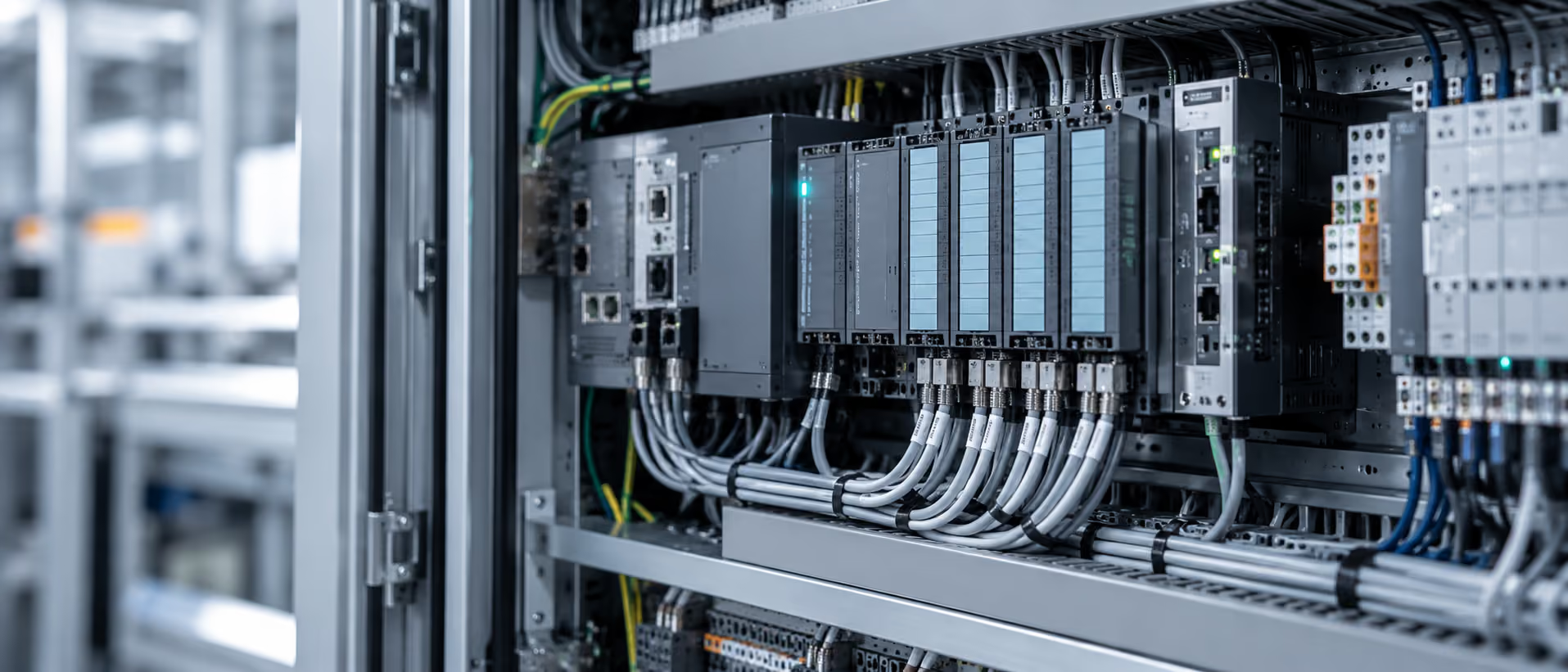
Retrofit brings controls and safety technology up to date on machines of any manufacturer, without the cost of a new purchase.
Working principle
Proven assemblies, combined for the task.
Proven assemblies
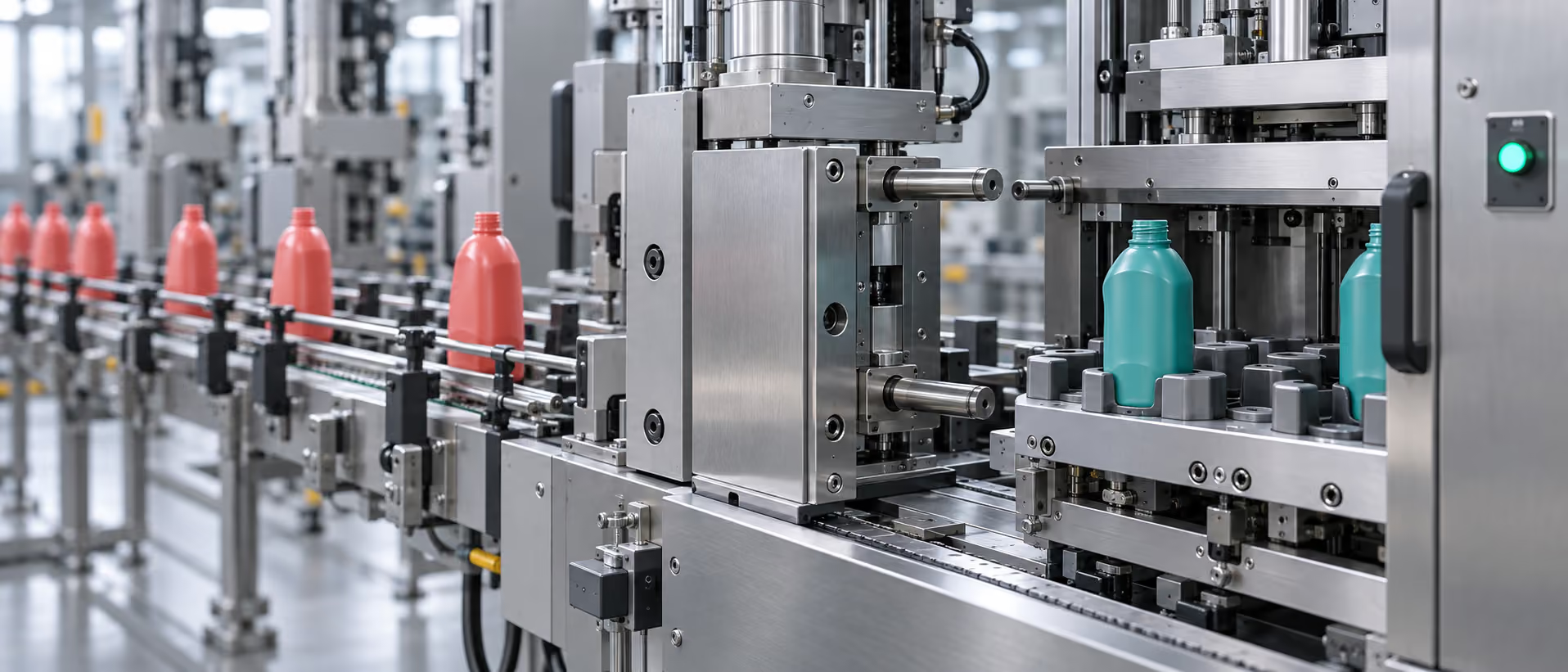
Axis modules, machining units and automation building blocks are proven in service, and our engineers combine them individually for each task. The combination keeps availability high even on machines built for one purpose. Delivery covers the single machine as well as the complete line, turnkey.
Hybrid systems
System solutions combine assembly modules, NC tables or robots in one hybrid structure. Different workpieces can run on one system, and the system can grow in stages as the product range or the volume grows.
We deliver the system.
You operate it.
Custom Solutions
Custom Machines
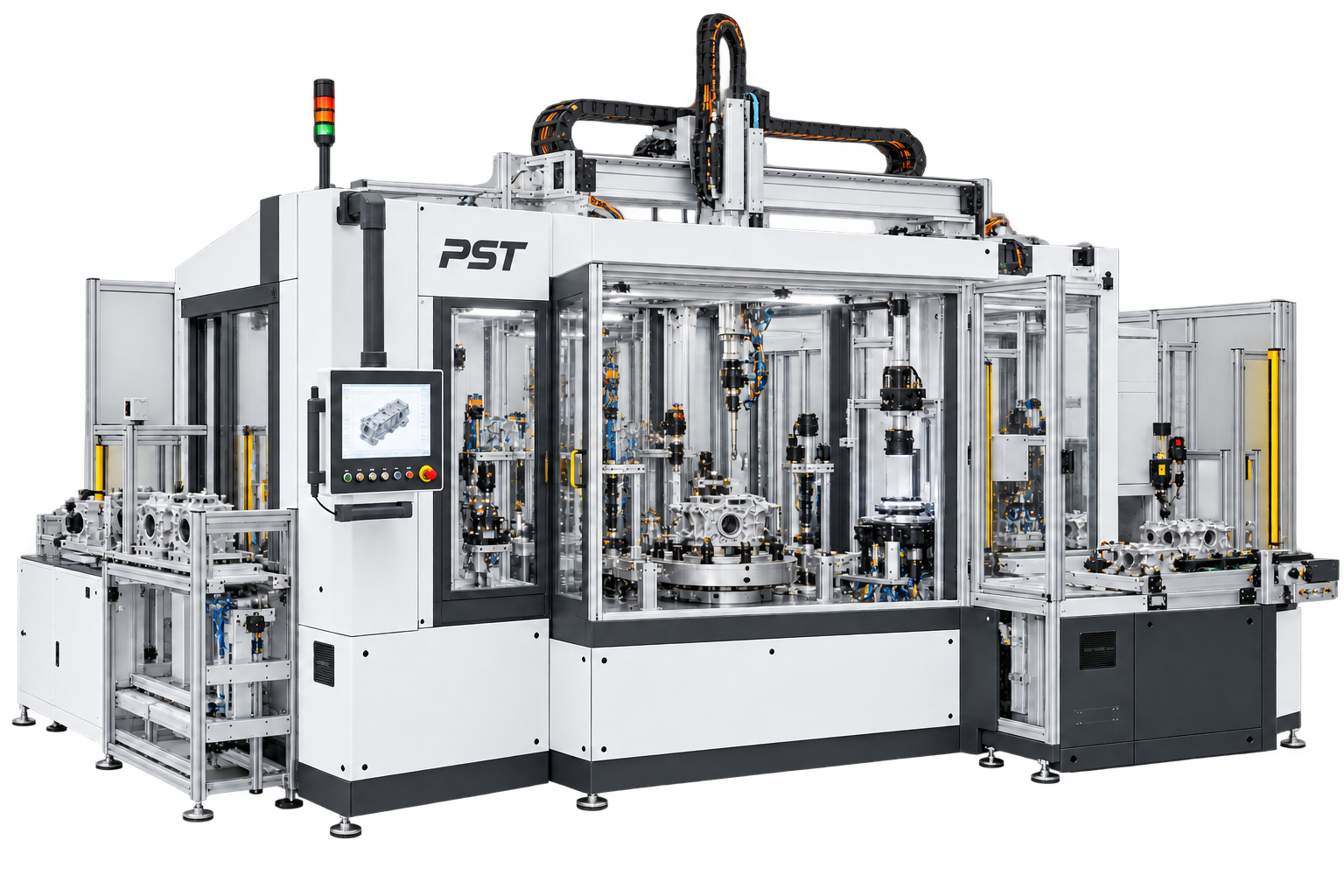
When no standard machine fits, we build yours from scratch. We start with the concept, work through the material flow layout and the control concept, and end with a machine cut to your product and your process. It is assembled from proven building blocks such as axis modules, machining units and automation components, so even a one-off machine reaches high availability and runs for years.
Downloads

We send datasheets and technical documentation on request.
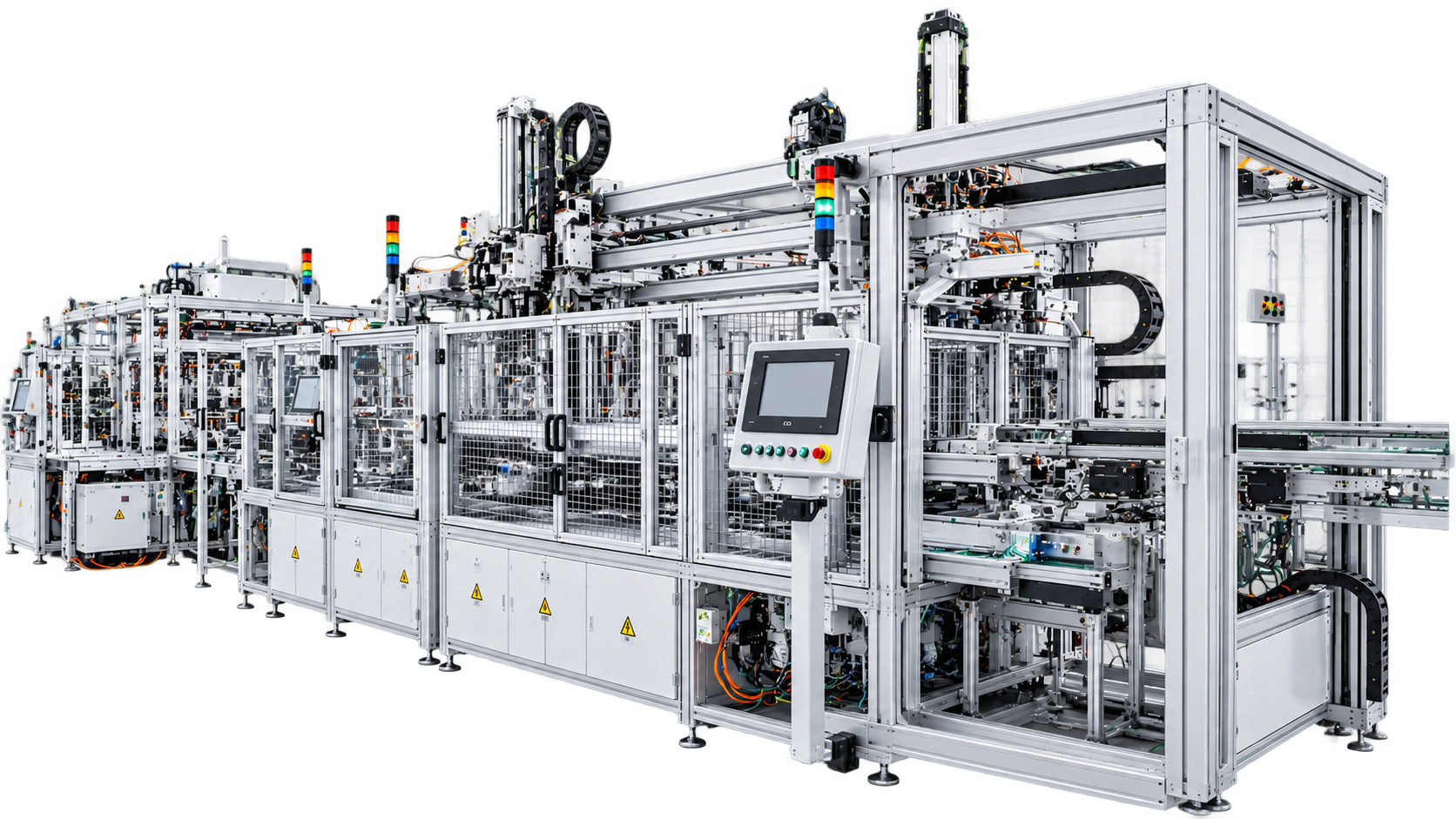
System Solutions
Every machine we build is also available as a turnkey system. Need different workpieces on the same line? Plan to expand in stages? Hybrid structures that combine assembly modules, NC tables and robots keep availability high and flexibility wide. You get one system, delivered ready to run.
Downloads
We send datasheets and technical documentation on request.
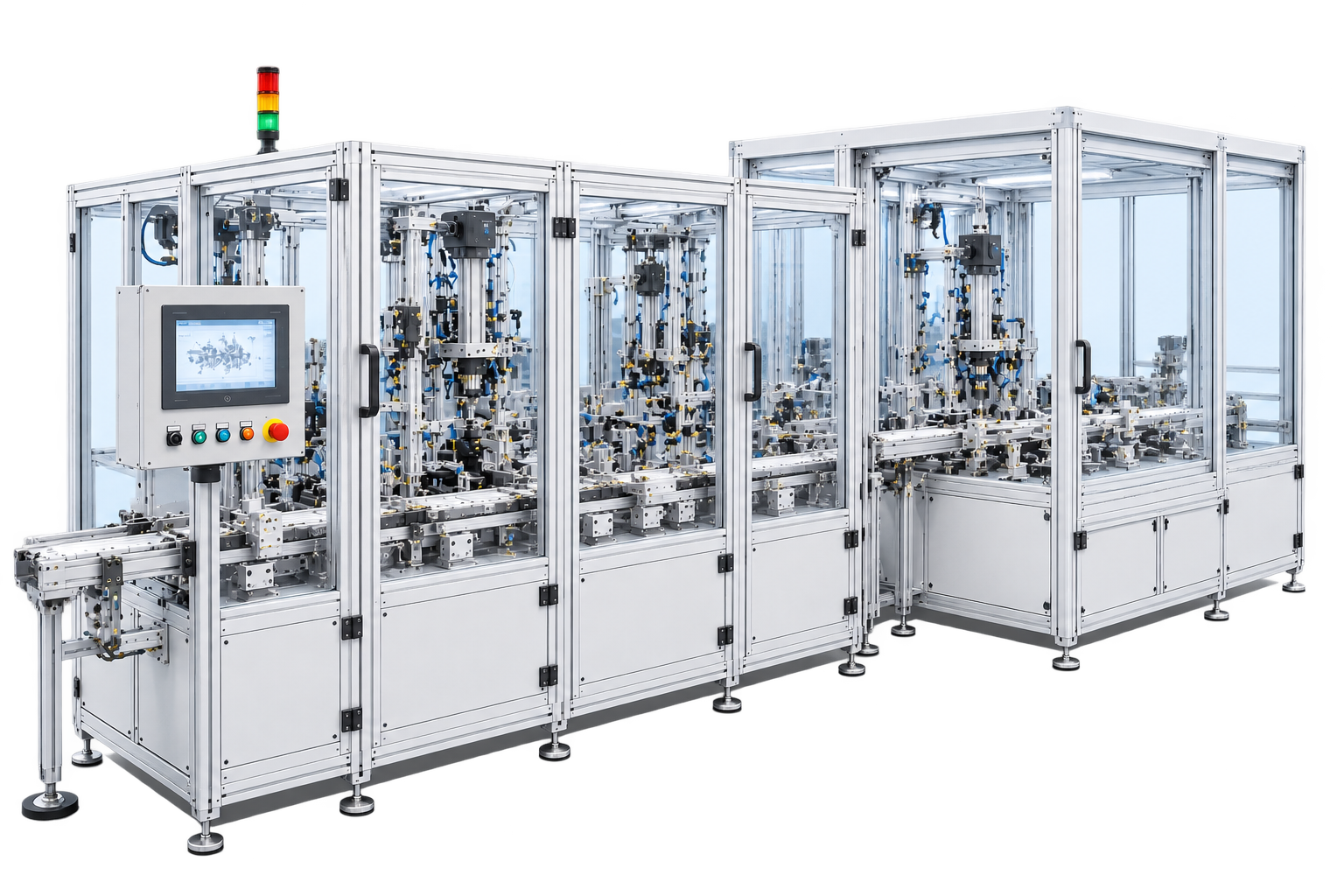
System Upgrades
Requirements move. Your line should move with them. We extend existing machines with additional stations, processes or capacity when you need it: new products, higher volumes, changed process steps. You stay flexible without investing in an entirely new system.
Downloads
We send datasheets and technical documentation on request.
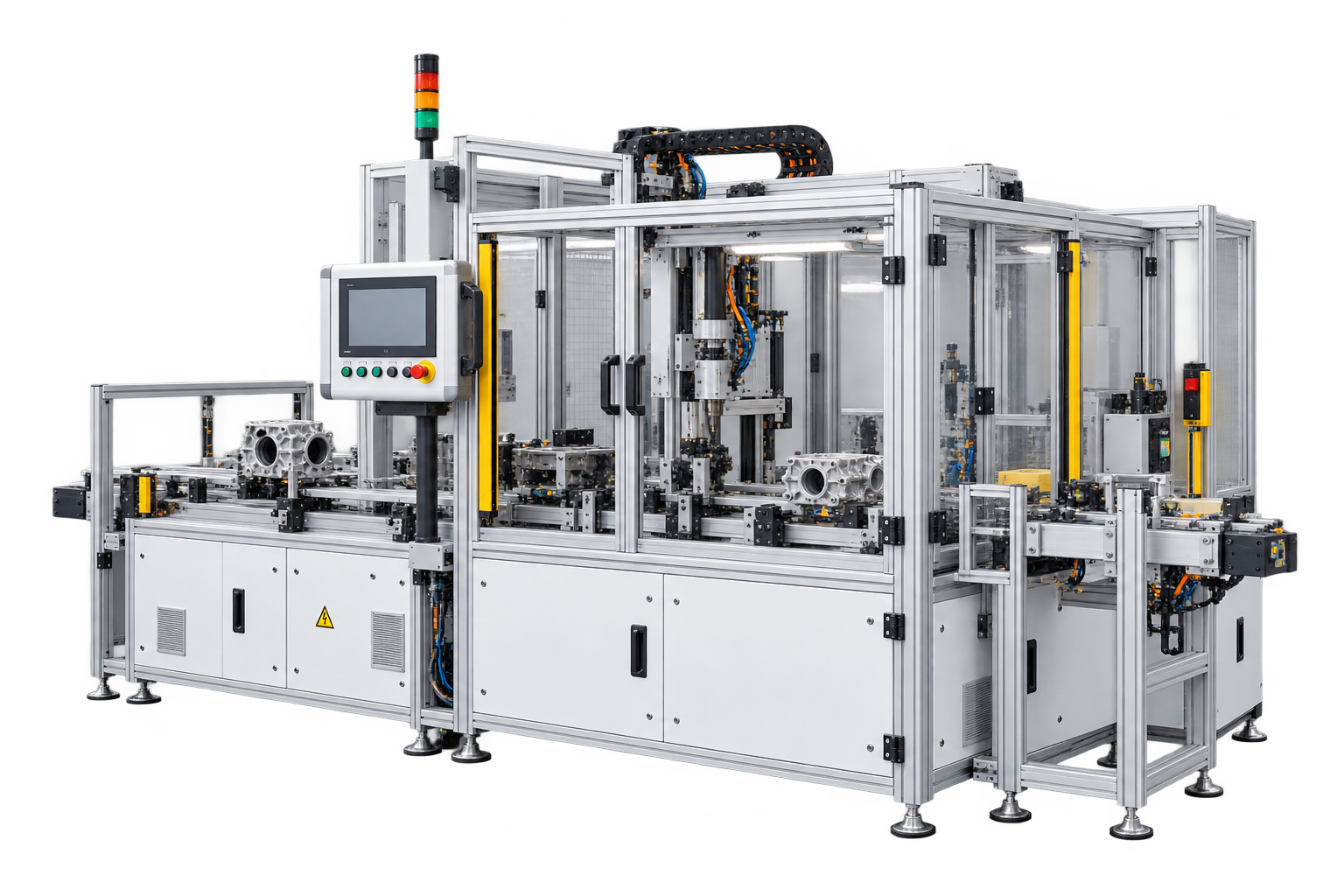
System Retrofits
Good machines outlast their controls. A retrofit brings your system up to date without the cost of a new machine: modern control, current safety technology, higher availability. We work independent of the original manufacturer and typically migrate to a current Siemens control. As long as the mechanics are sound, the machine keeps earning.
Downloads
We send datasheets and technical documentation on request.
Built for demanding production.
Defense & Security
01
We engineer assembly and machining systems for ammunition and fuze production, where speed and precision allow no compromise.
Ammunition Assembly
Fuze & Initiator Assembly
Projectile & Component Machining

More information
Agriculture & Construction Machinery
02
Machines that work through dust, heat and peak load depend on components that hold. We build the assembly and machining systems behind them.
Engine & Powertrain Component Machining
High-Mix Low-Volume Production
Line Retrofit & Modernization
More information
Talk to Our Engineers
Contact
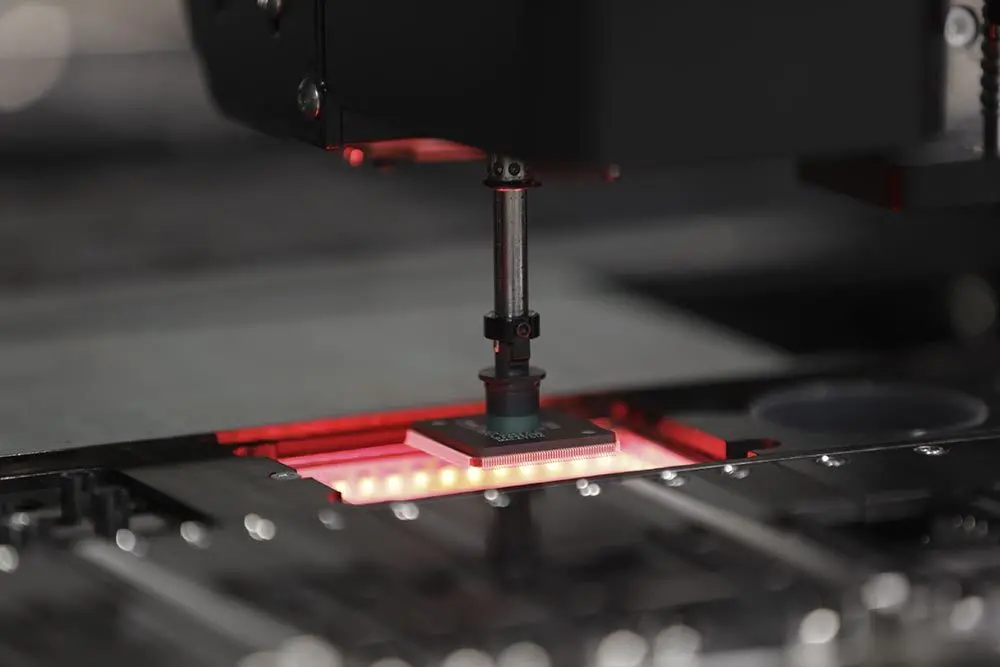
We build for all industries. Tell us about your part and your process.
Frequently Asked Questions
Do you retrofit machines from other builders?
Yes. We analyze the machine, plan the measure and implement it independently of the original machine builder, subject to technical assessment. We typically migrate to a current Siemens control.
When is a retrofit worth it?
When the mechanics are sound and the controls are not. Many lines still run on control generations that are only available as spare parts today, such as SIMATIC S7-300 since October 2025. A retrofit removes that risk at a fraction of the cost of a new machine.
Can you add stations to a machine that is already running?
Yes. We extend existing machines with additional stations, processes or capacity. Preparation runs in parallel to production, and installation is scheduled into your planned shutdowns.
When do you recommend a custom machine?
When no standard platform fits your part, your process or your cycle time. Often these are the processes that set a manufacturer apart from the competition.
Can you build to our internal machine specifications?
Yes. Your specification sheet, preferred component suppliers and plant standards are part of the design from the first concept. Deviations are agreed in writing before the build, not discovered at acceptance.
Which control systems do you use?
We typically build on current Siemens control technology. If your plant has its own standard for controls, drives or safety components, we build to it.
Still have questions? Get in touch with our support team and we'll
discuss your unique requirements.
Which interfaces do you support?
OPC UA as standard, plus PROFINET, MQTT and direct database or MES interfaces. Data structures are agreed with your IT and quality teams during planning.
Does an upgrade require a new conformity assessment?
Only if the change counts as a substantial modification under EU machinery law. We assess every upgrade, update the risk assessment and handle the conformity documentation where required.
How do you reduce the risk of a one-off machine?
We build from proven modules such as axis units, machining units and automation components. Critical processes are simulated and trialed before the build, so a one-off machine still reaches series availability.
Can our MES receive the production data?
Yes. Process data, results and serial numbers are available through OPC UA as standard. Other protocols and direct MES interfaces are configured to your IT landscape.
Are your machines CE marked?
Yes. Every machine for the European market is built on a documented risk assessment and ships with CE marking and a declaration of conformity. From January 20, 2027, this follows the new EU Machinery Regulation 2023/1230. For North America, we build to the applicable electrical and safety standards on request.
How do you prove a machine meets spec before it ships?
In a factory acceptance test (FAT) at our plant, with your parts, at full rate. We document output, capability and reject handling. After installation, a site acceptance test (SAT) confirms the same results on your floor.
Still have questions? Get in touch with our support team and we'll
discuss your unique requirements.
How long is production down during a retrofit?
As briefly as possible. Control cabinets are built and tested in advance, and the cutover is staged into planned shutdowns. For a prepared control replacement, three days of downtime is a realistic target.
What does turnkey mean in practice?
One contract, one responsible partner. We deliver the complete system including feeding, safety technology and controls, commission it on your floor and hand it over after acceptance, ready to produce.
How long are spare parts available?
Every machine ships with a spare parts list and a recommended stock for your site. We keep wear parts available and support our machines with spare parts for at least ten years.
How fast do you respond when a machine stops?
Remote support starts the same business day. If a technician is needed on site, we are there within 24 to 48 hours in Europe and North America. Service agreements with guaranteed response times are available.
Can you test our parts before we place an order?
Yes. For critical joining, machining or inspection steps, we run feasibility trials with your sample parts. You see the result before you commit to the machine.
How long does a project take from order to acceptance?
Systems based on our standard platforms typically take six to nine months. Complex lines with machining, assembly and inspection take nine to fourteen months. The binding schedule is part of every offer.
Still have questions? Get in touch with our support team and we'll
discuss your unique requirements.