
Precision
Machining
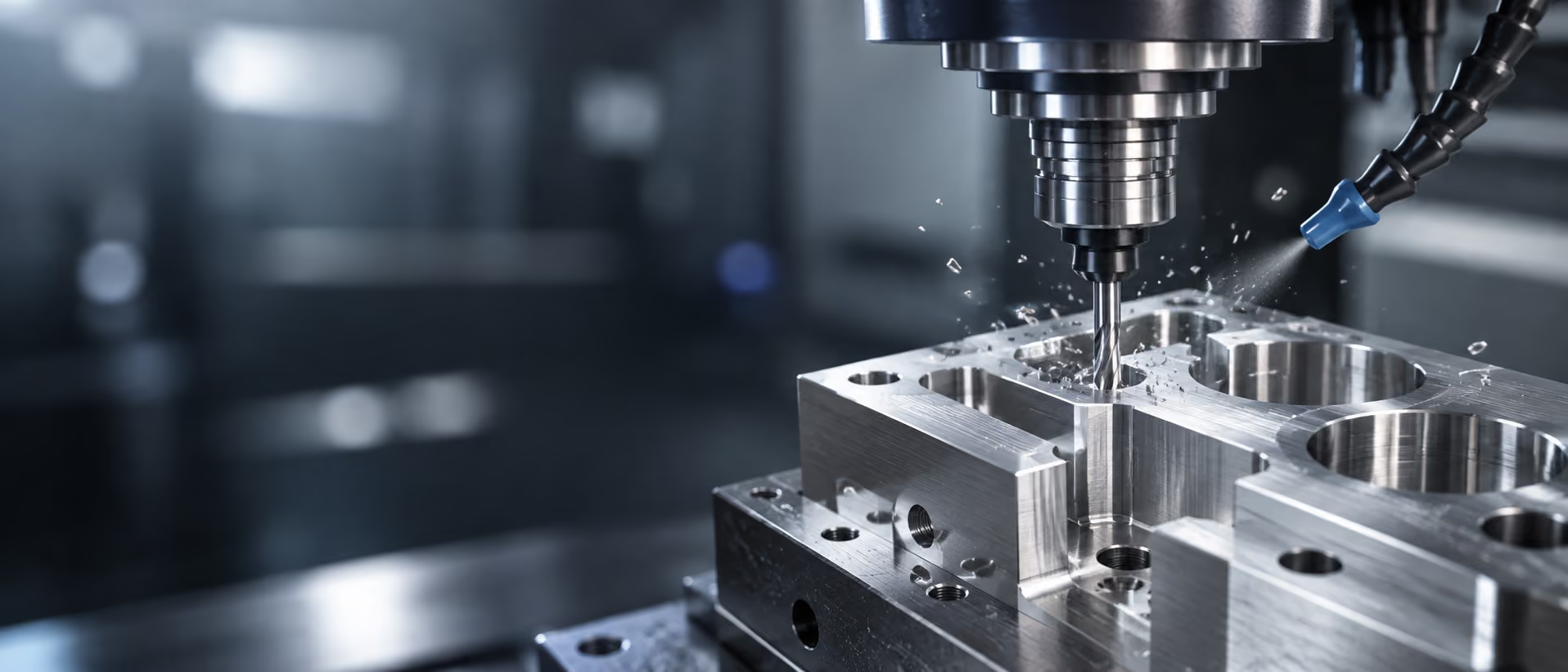
PST continues to build the proven machining technology, with tolerances in the micrometer range, from the flexible small series to the high-performance line. Each line starts with an analysis of the part and the process, and PST supports it from the proposal through design to commissioning with one dedicated contact.

The systems reach short cycle times at high volumes. Loading runs in parallel to machining and saves floor space.

A compact axis layout without overhanging masses supports micrometer tolerances, and an adjustment mechanism compensates for tool wear.

Systems with two to five motorized spindles work with automatic tool change and a tool magazine.
Working principle
Modular units, configured to the process.
Modular design
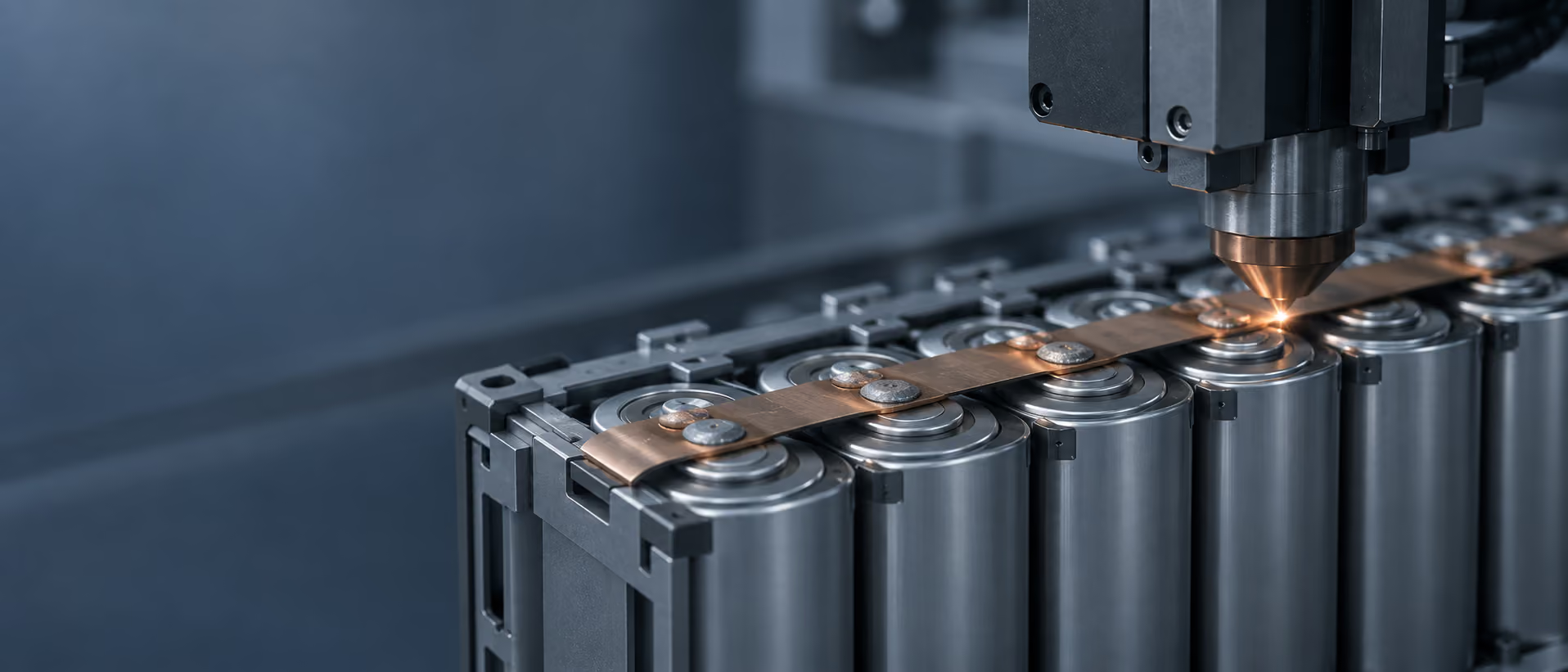
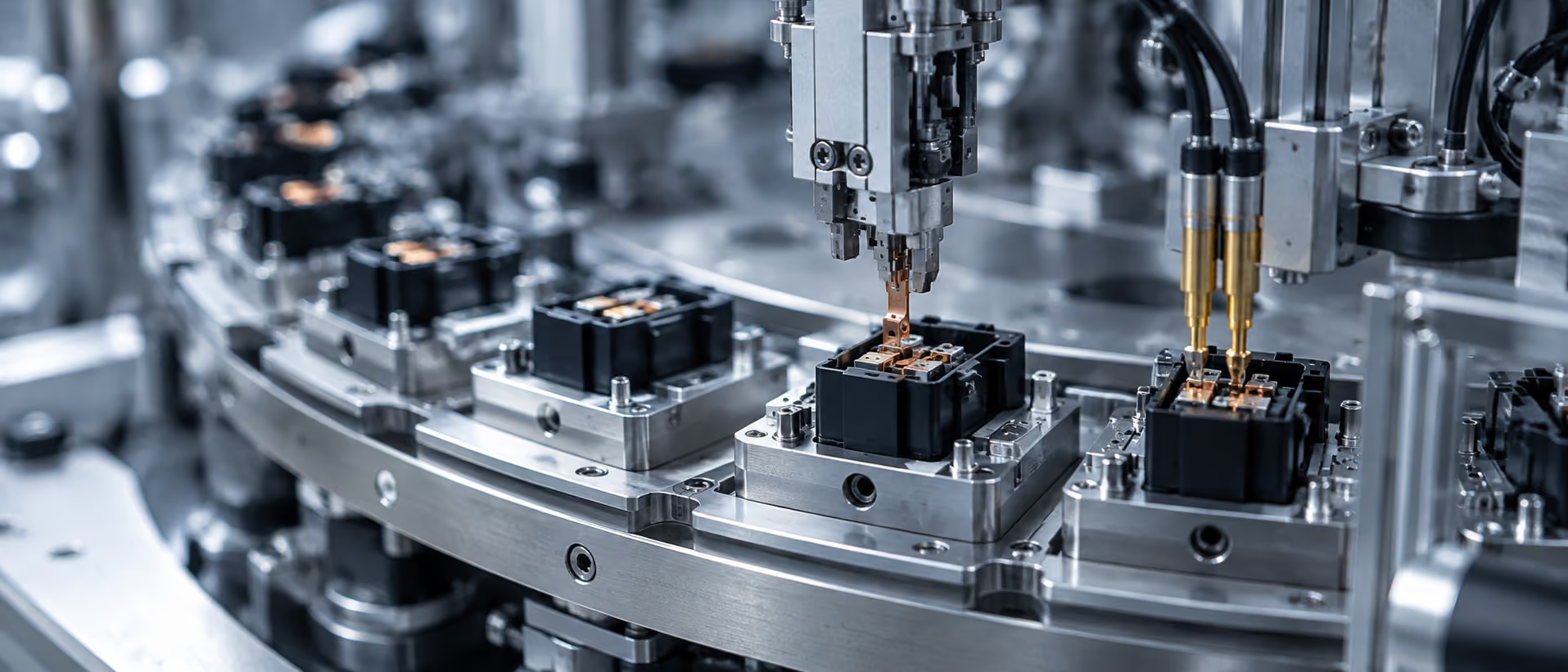
The systems build on modular machining units with horizontal, vertical or inclined spindles, and the process sequence is freely configurable. Machining combines with press-fitting, screwing, laser treatment or hot joining. Small series run on manually loaded modules, large series on fully automatic lines.
Flexible clamping
A clamping cube concept handles several workpiece types without retooling. Feed axes do not overlap, the layout has no overhanging masses and the geometry of the machined feature is freely programmable. An adjustment mechanism compensates for tool wear in the spindles.
We deliver the system.
You operate it.
Precision Machining Systems
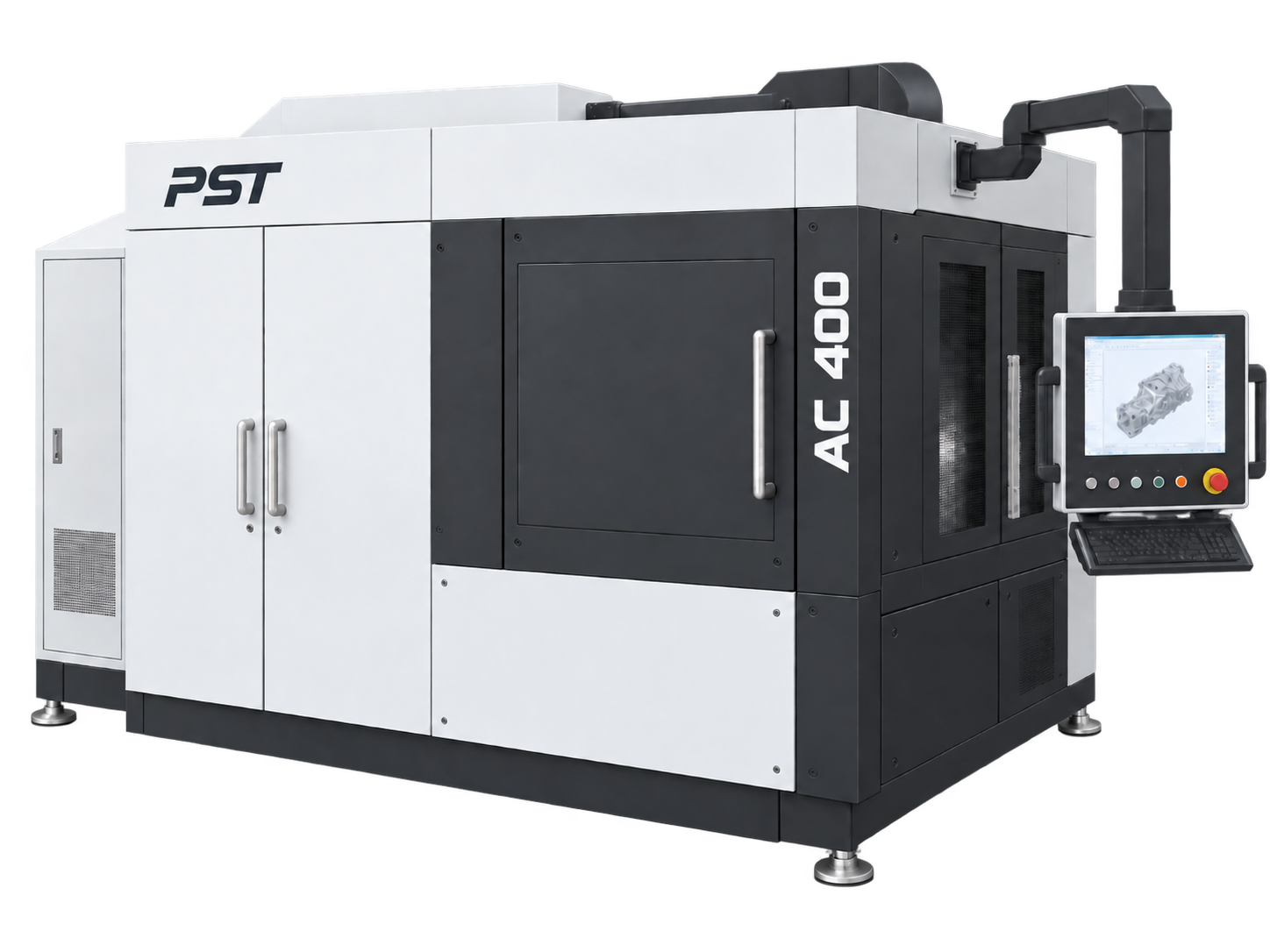
AC 400 Machining Center
The flexibility of a machining center, the economics of a dedicated machine. The AC 400 carries 2, 3, 4 or 5 motor spindles, with automatic tool change and a tool magazine. Options include spindles with NC facing and additional spindle rows. It machines a wide range of components, and several workpiece types can share one system.
Downloads

We send datasheets and technical documentation on request.
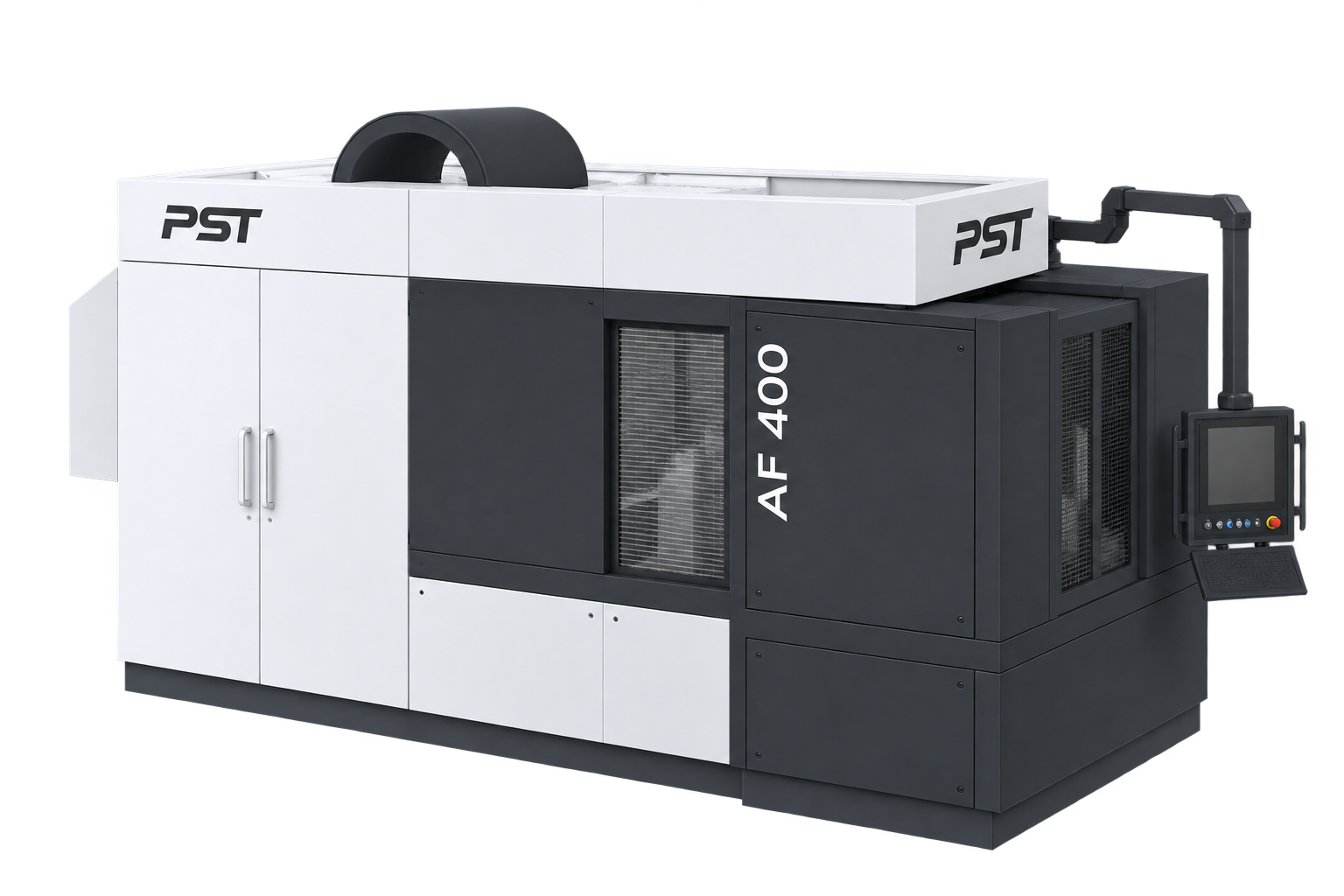
AF 400 Fine Boring Machine
Micrometer-range tolerances, held bore after bore. The AF 400 handles intermediate and fine boring. Its feed axes are not stacked, and its compact axis layout has no overhanging masses, which protects the geometry of every bore. Oval and trumpet-shaped bore profiles run with freely programmable geometry, and an adjustment device in the boring spindles compensates tool wear. A clamping cube lets you run up to four workpiece types without changeover.
Downloads
We send datasheets and technical documentation on request.
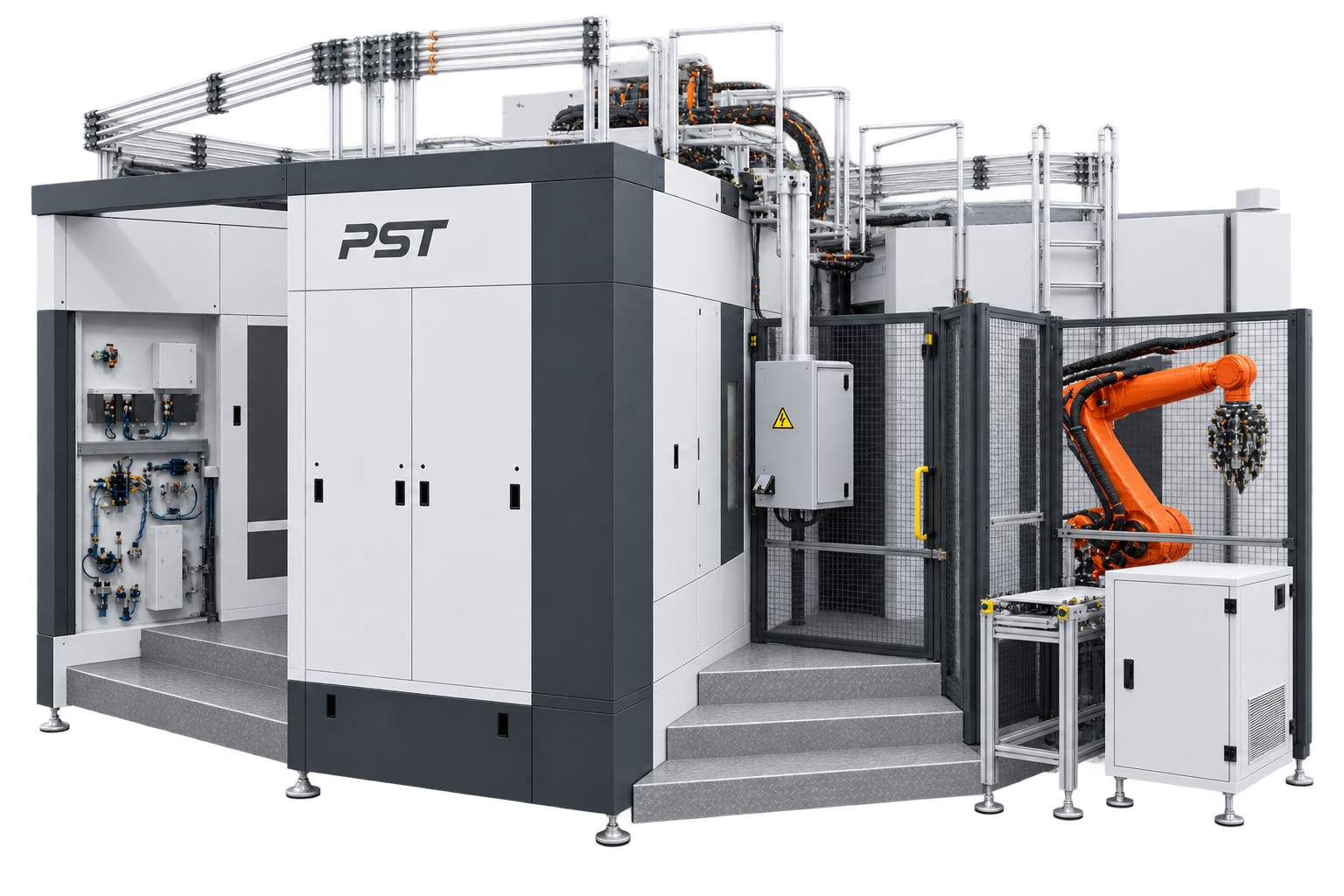
AR 400 Rotary Transfer Machine
Built for volume. The AR 400 is our rotary transfer machine for short cycle times and large quantities. Each machine is configured to your process sequence, with modular machining units in horizontal, vertical or inclined spindle arrangement. Parts are loaded in parallel with machining, which keeps cycle times short and quality consistently high, on a footprint optimized to the process.
Downloads
We send datasheets and technical documentation on request.
Built for demanding production.
Defense & Security
01
We engineer assembly and machining systems for ammunition and fuze production, where speed and precision allow no compromise.
Ammunition Assembly
Fuze & Initiator Assembly
Projectile & Component Machining

More information
Industrial Goods
02
Valves, actuators, bearings and couplings end up in machines where downtime is expensive. We build the systems that produce them and grow with your order book.
Industrial Component Assembly
Special-Purpose Machines
Scalable & Modular Automation
More information
Talk to Our Engineers
Contact
We build for all industries. Tell us about your part and your process.
Frequently Asked Questions
Which machining configurations are possible?
Spindles can be arranged horizontally, vertically or inclined, and the modular machining units are arranged to match the process sequence. Systems with 2 to 5 motor spindles, automatic tool change and a tool magazine are available.
Can different part types run on one machining system?
Yes. Several workpiece types can share one system, and in fine boring up to four types run without retooling. The investment stays productive across whole product families.
Can a machining system be converted to a new part?
Yes. Machining units are modular and fixtures are exchangeable. When a part changes, the machine is reconfigured instead of replaced.
How do multi-station machining systems keep cycle times short?
All stations machine at the same time, and parts are loaded in parallel with machining. The cycle time is set by the longest single operation plus indexing, not by the sum of all operations.
Can one partner handle machining and assembly for the same part?
Yes. We build precision machining and high-speed assembly systems in house. The part moves from raw stock to verified assembly under one engineering team, with one set of interfaces and one contact.
Which processes do you cover?
We build high-speed assembly systems and precision machining systems, with inspection and test integrated into the line. One partner for the full chain, from raw stock to the verified finished part.
Still have questions? Get in touch with our support team and we'll
discuss your unique requirements.
How is tool wear compensated in fine boring?
An adjustment device in the fine boring spindles corrects the cutting edge position. Combined with post-process measurement, the machine keeps diameters inside tolerance automatically.
Which tolerances can fine boring systems hold?
Bore diameters in the micrometer range, typically within ± 5 µm, with form and position held bore after bore. Non-stacked feed axes and no overhanging masses protect the geometry.
How do you prove a machine meets spec before it ships?
In a factory acceptance test (FAT) at our plant, with your parts, at full rate. We document output, capability and reject handling. After installation, a site acceptance test (SAT) confirms the same results on your floor.
Which process capability do you design for?
Critical features are designed for a machine capability index (Cmk) of 1.67 or higher. We prove it in a documented capability study with your parts before the machine ships. Process capability (Cpk of 1.33 or higher) is then confirmed in series production on your floor.
What traceability do you provide?
Every part and batch is documented through the process: which station, which parameters, which result. Traceability is configured to your requirements, down to part and batch level.
How is every unit verified?
Inspection is part of the process, not a step after it. Each unit is checked in the line, and the result is stored against the part. Nothing moves to the next station without a pass.
Still have questions? Get in touch with our support team and we'll
discuss your unique requirements.
Which documentation do we receive with the machine?
Operating instructions, declaration of conformity, electrical and pneumatic schematics, spare parts lists and maintenance plans. PLC source code is supplied by agreement.
Do you train our operators and maintenance teams?
Yes. Training is part of commissioning, on your machine and with your parts. Operators, setters and maintenance staff each get the training their role needs, backed by complete documentation.
What warranty do you provide?
Twelve months from acceptance as standard. Extended warranty terms can be agreed per project.
Can you test our parts before we place an order?
Yes. For critical joining, machining or inspection steps, we run feasibility trials with your sample parts. You see the result before you commit to the machine.
What do you need from us to prepare an offer?
Part drawings or CAD data, annual volume, target cycle time, number of variants and your quality requirements. Sample parts help. With this, you receive a technical concept and budget price within two to three weeks.
How long does a project take from order to acceptance?
Systems based on our standard platforms typically take six to nine months. Complex lines with machining, assembly and inspection take nine to fourteen months. The binding schedule is part of every offer.
Still have questions? Get in touch with our support team and we'll
discuss your unique requirements.