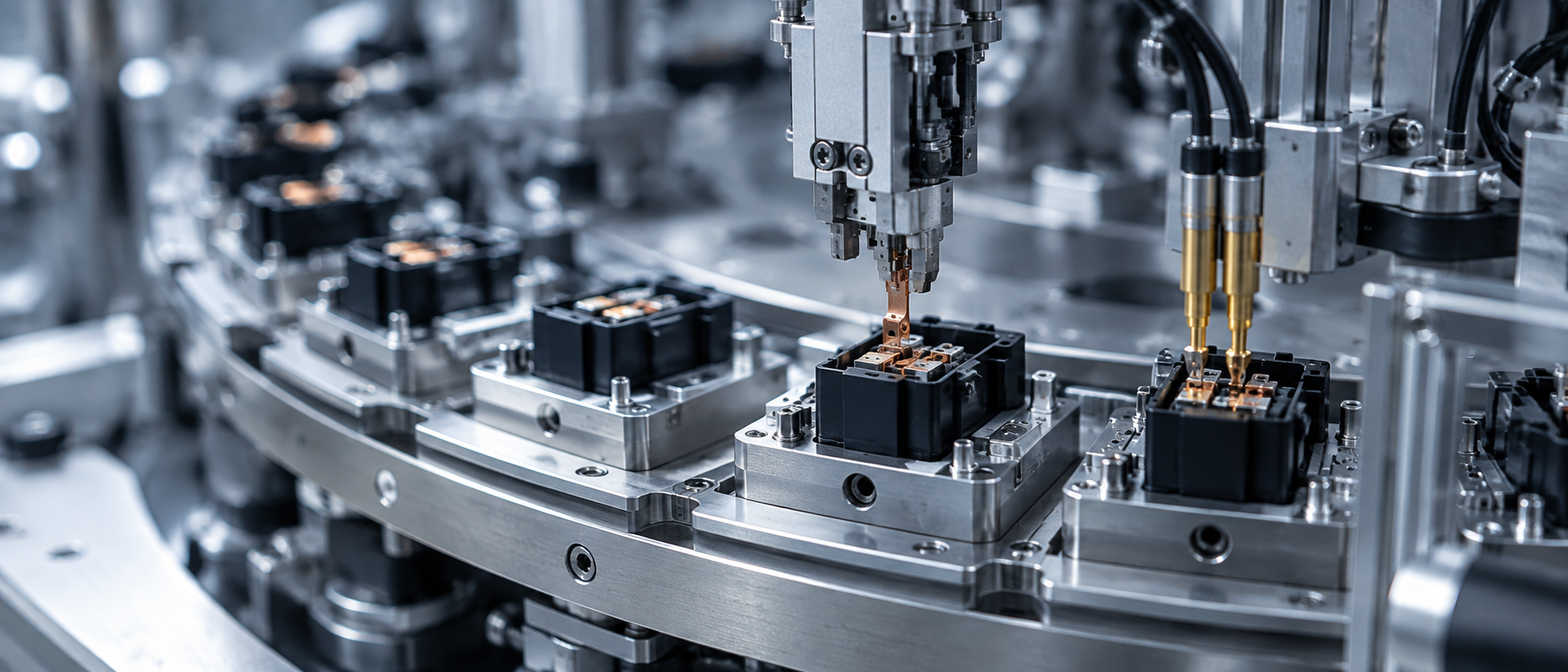

Electromechanical Component Assembly
Relays, switches and connectors are small. Their failure modes are not.
Electromechanical components switch power, carry signals and close circuits millions of times over their life. Contact gaps, spring forces and pin positions are set in hundredths of a millimeter, at volumes only high-speed assembly can deliver. We build systems that feed, assemble, adjust and test these parts in one machine. Every contact positioned. Every force verified. Every unit tested before it leaves the station.
From raw body to finished assembly.
One team answers for all of it.
Throughput
Rotary indexing assembles hundreds of components a minute with every station in sync.
Precision
Contact gaps and spring forces are measured and set in the machine, not reworked afterward.
Function Test
Resistance, switching function and insulation are tested on every unit.
Process Control
Monitored joining keeps critical dimensions inside their process window across long production runs.
We deliver the system.
You operate it.
High Speed Assembly & Inspection Cells
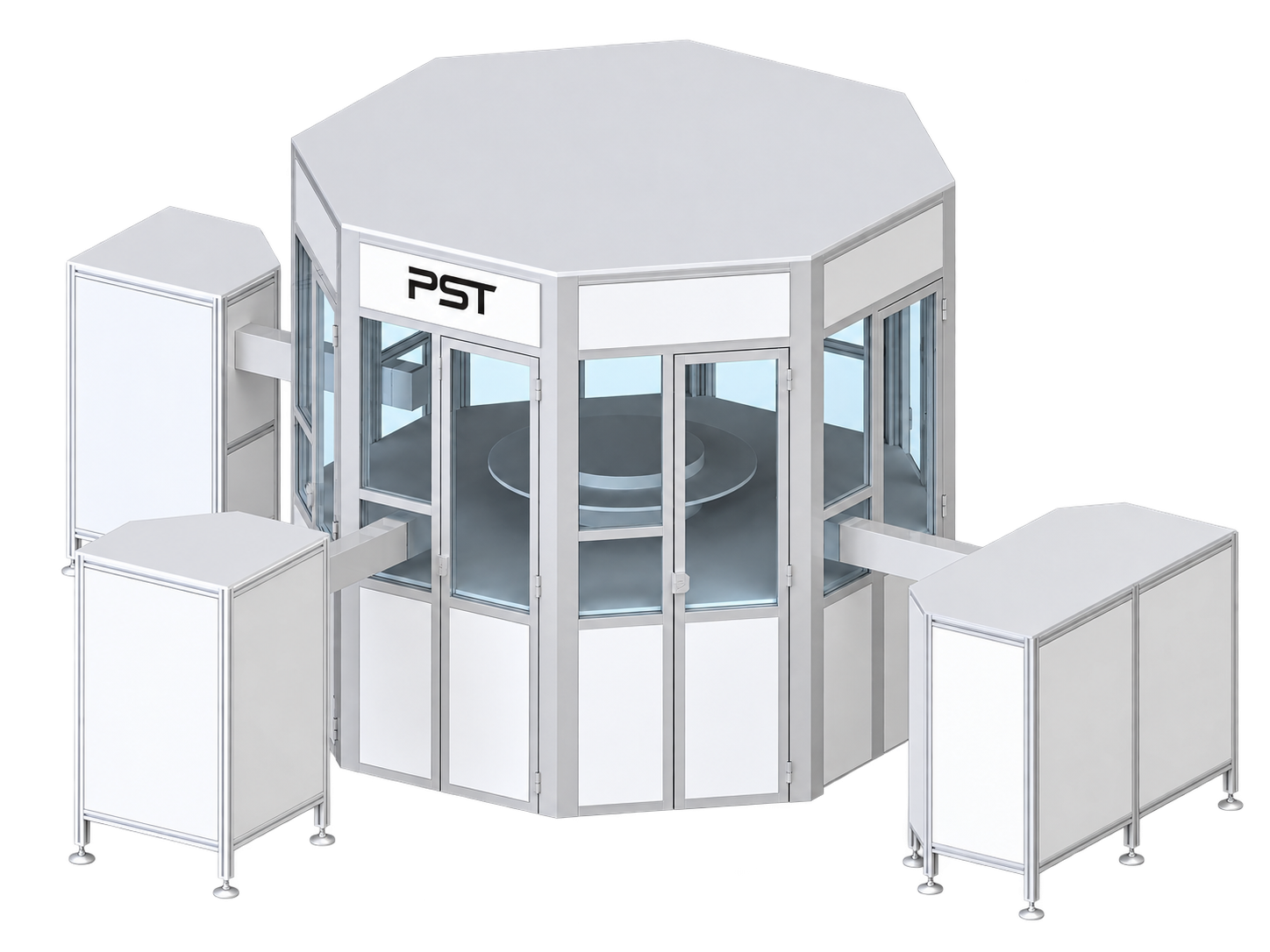
Okumat
Contact gaps and spring forces are set in hundredths of a millimeter. At production rate, that only works if every cycle repeats exactly. OKUMAT is built for it: up to 24 stations around one central drive, cam-controlled motion and a repeatability below 0.05 mm. Depending on the system, output runs from 10 to 300 parts per minute. For assemblies with few individual parts there is the compact Modular Solution, for longer process chains the linear Transfer Solution.
Discover all High Speed Assembly Systems

Up to 300 parts a minute, and every one of them exactly where it belongs. Explore the high-speed assembly systems that turn many small components into finished products at a pace most lines never reach.

Downloads
We send datasheets and technical documentation on request.
Custom Solutions & Retrofit
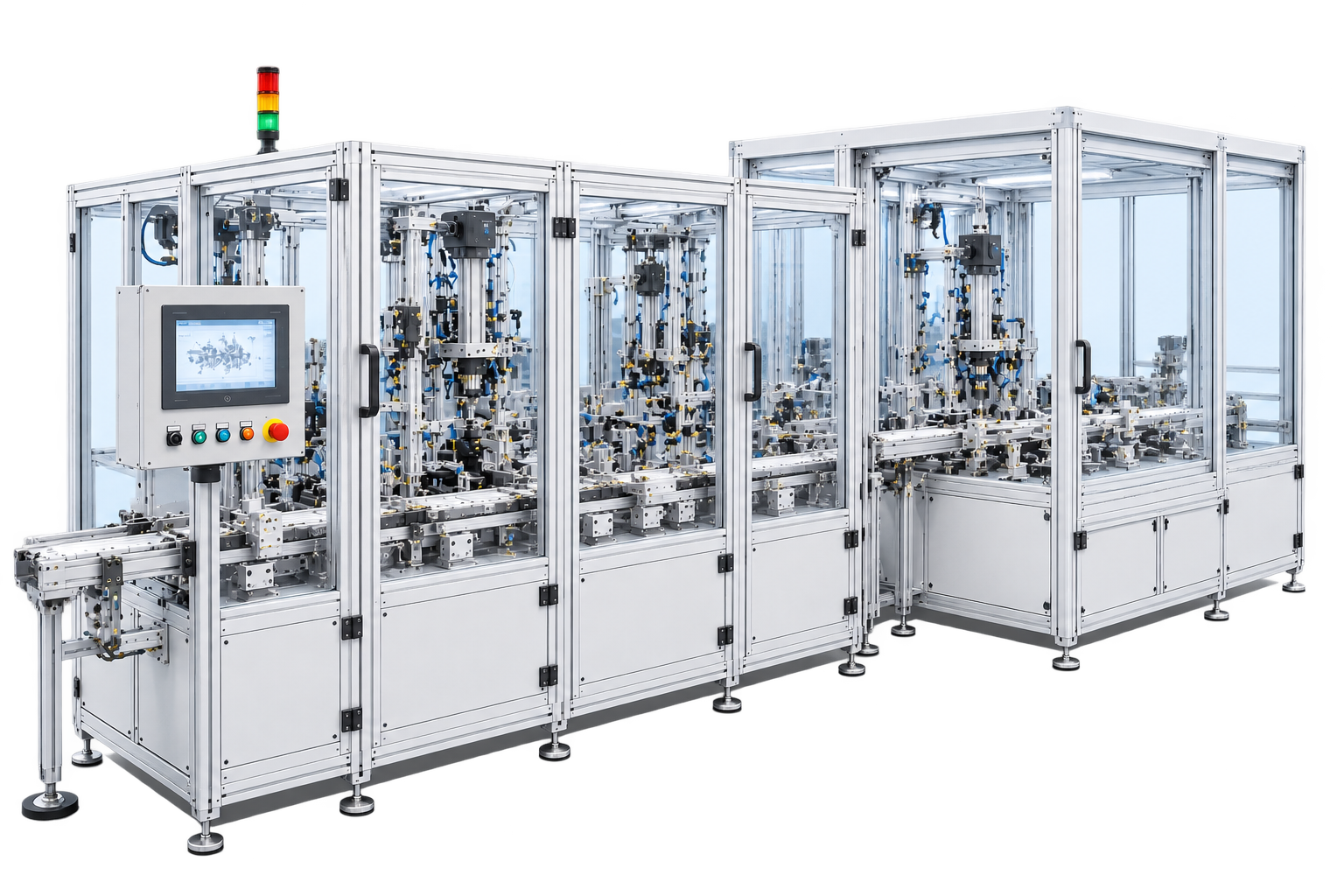
System Upgrades
A relay line that reaches its limit does not need a second relay line. System Upgrades extend an existing machine with additional stations, processes or capacity: new products, higher volumes, changed process steps. You keep the machine you know and stay flexible without investing in an entirely new system. If the control is what holds the line back, there are System Retrofits.
Discover Custom Solutions & Retrofit
Your process is not in a catalog, and your machine should not be either. Explore how we build, extend and modernize production systems around what you make, from the first sketch to the last shift.
Downloads
We send datasheets and technical documentation on request.
One team from first sketch to a line that runs.
A process that has proven itself. One team plans, engineers and commissions your machine, and hands it over turnkey, ready to run, in the shortest possible time.

Planning
Concept, material flow and scope, defined with you before the first drawing is released.

Engineering
Mechanics, controls and process, designed as one system and simulated before the build.
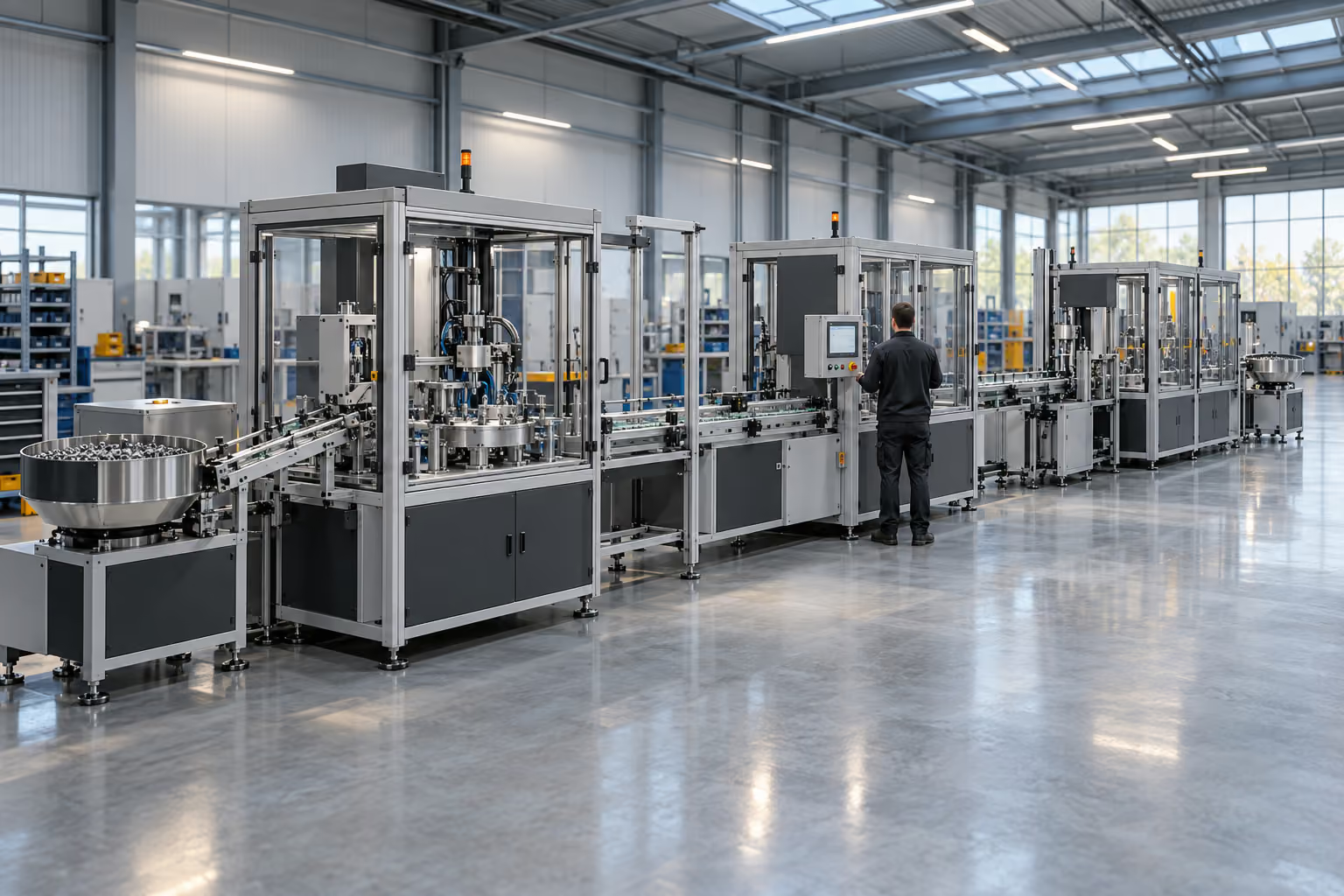
Realization
Build, installation and commissioning at your plant, then handed over ready to run.
Frequently Asked Questions
What output can an OKUMAT system reach?
Between 10 and 300 parts per minute, depending on part size, number of components and process. The exact rate is set by the slowest process, so we design every station to match the target cycle.
Which processes can run on an OKUMAT?
Press-fitting, screwing, crimping, riveting, welding, dispensing, marking, camera inspection and leak or function testing. Assembly and verification run on the same machine, in the same cycle.
Which feeding technologies do you use?
Vibratory bowl feeders, linear and step feeders, and flexible feeders with vision for complex parts. The technology is chosen by part geometry, surface and rate.
When is the Modular Solution the right choice?
For assemblies with few individual parts that need a compact, fast and reliable machine. It covers the full process in a small footprint.
Still have questions? Get in touch with our support team and we'll
discuss your unique requirements.
Why use cam-driven motion instead of servo axes?
Cams couple every station mechanically to one drive. Each cycle repeats exactly, even at high rates, with a repeatability below 50 µm. Where a process needs flexible motion, we add servo axes at that station.
Can you feed delicate or coated parts?
Yes. Protective coatings in the feeder protect sensitive surfaces, and the parts arrive gently, correctly oriented and on cycle.
How is every unit verified?
Inspection is part of the process, not a step after it. Each unit is checked in the line, and the result is stored against the part. Nothing moves to the next station without a pass.
Which process capability do you design for?
Critical features are designed for a machine capability index (Cmk) of 1.67 or higher. We prove it in a documented capability study with your parts before the machine ships. Process capability (Cpk of 1.33 or higher) is then confirmed in series production on your floor.
Still have questions? Get in touch with our support team and we'll
discuss your unique requirements.
Can you test our parts before we place an order?
Yes. For critical joining, machining or inspection steps, we run feasibility trials with your sample parts. You see the result before you commit to the machine.
How long does a project take from order to acceptance?
Systems based on our standard platforms typically take six to nine months. Complex lines with machining, assembly and inspection take nine to fourteen months. The binding schedule is part of every offer.
How long are spare parts available?
Every machine ships with a spare parts list and a recommended stock for your site. We keep wear parts available and support our machines with spare parts for at least ten years.
Still have questions? Get in touch with our support team and we'll
discuss your unique requirements.


Process System Technologies
Anton-Grimmer-Straße 4
73466 Lauchheim
Germany


