
High-Mix Low-Volume Production
More variants. Smaller batches. The quality of a high-volume line.
Agricultural and construction machinery is built to order: by region, by season, by customer. Batch sizes shrink while the variant list grows. Lines built for mass production stand still at every changeover. We build assembly systems that run variant mixes in one flow, with recipe-driven stations, quick-change fixtures and robot cells that adapt without retooling. Lot size one with production-level quality.
From raw body to finished assembly.
One team answers for all of it.
Flexibility
Different variants run back to back. The machine reads the part and loads the recipe.
Recipe Control
Parameters and test limits load from the recipe, reducing manual entry during variant changes.
Changeover
Robot cells switch between variants by program. Fixtures change in minutes.
Conformity
Every variant gets the same monitoring and testing as a high-volume part.
We deliver the system.
You operate it.
Precision Machining
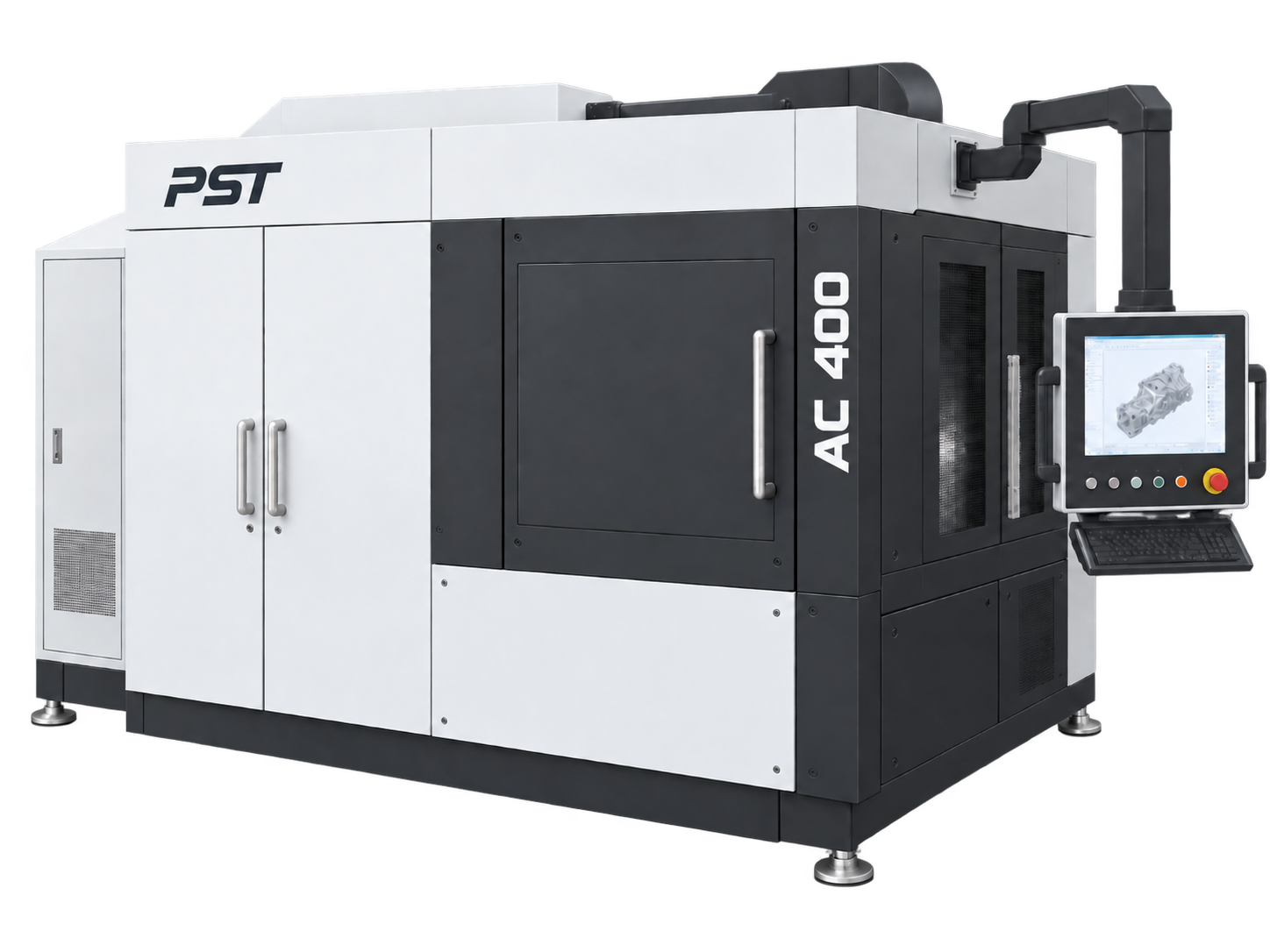
AC 400 Machining Center
More variants, smaller lots, and no time to wait for retooling. The AC 400 pairs the flexibility of a machining center with the economics of a specialized machine: 2, 3, 4 or 5 motor spindles, automatic tool change and a tool magazine. It machines a wide range of components, and several workpiece types can share one system. For fine bores there is the AF 400 Fine Boring Machine, for large quantities the AR 400 Rotary Transfer Machine.
Discover Precision Machining at PST

Micrometers are not the goal, they are the starting point. Explore the machining systems that hold tolerances bore after bore, from high-volume production to flexible lots, and see how precision becomes routine.

Downloads
We send datasheets and technical documentation on request.
Custom Solutions & Retrofit
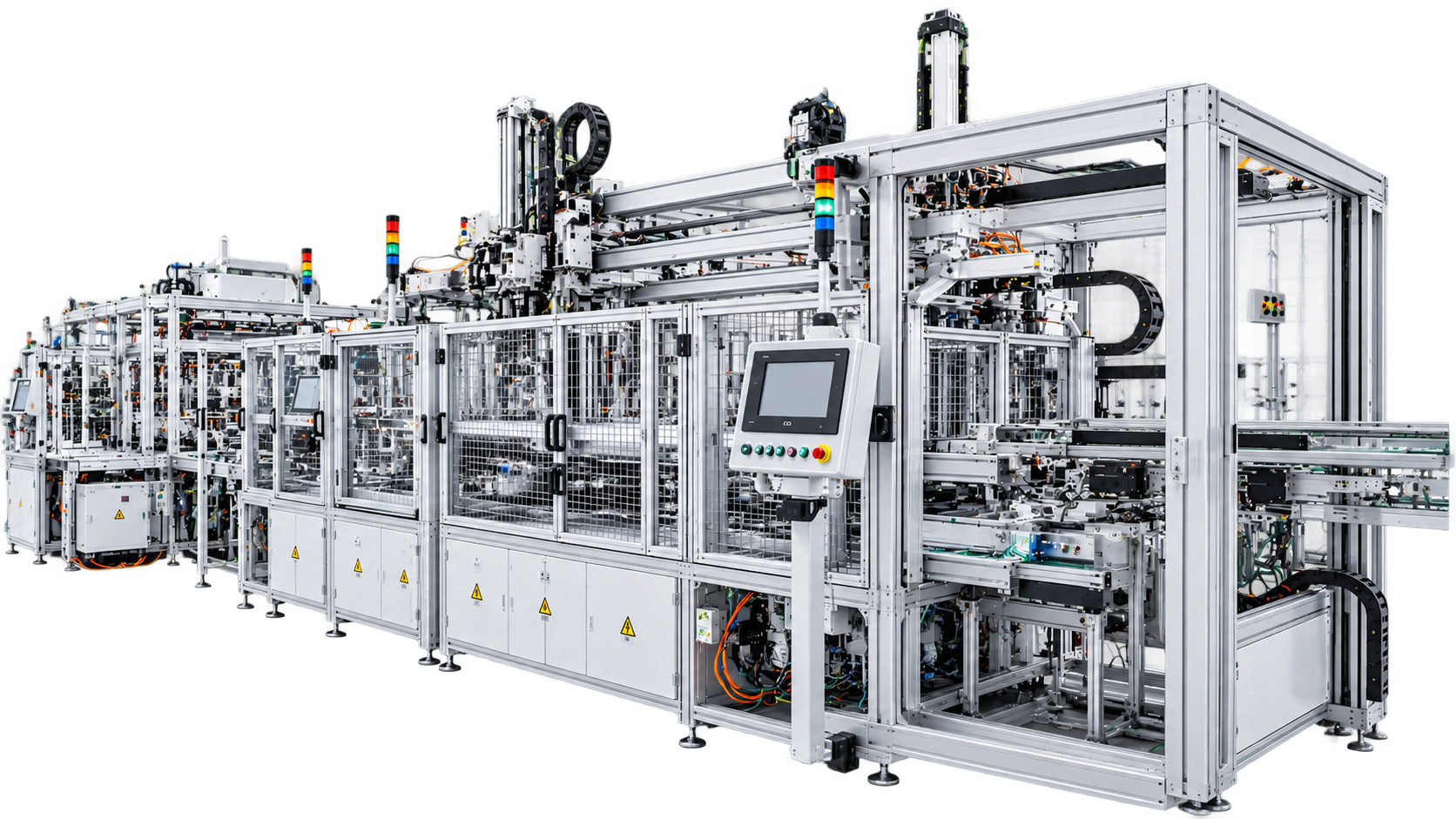
System Solutions
Different workpieces on the same line is the normal case here, not the exception. Every machine we build is also available as a turnkey system. Hybrid structures that combine assembly modules, NC tables and robots keep availability high and flexibility wide, and you can expand in stages as the variant list grows. You get one system, delivered ready to run. For a process no standard machine offers, there are Custom Machines.
Discover Custom Solutions & Retrofit
Your process is not in a catalog, and your machine should not be either. Explore how we build, extend and modernize production systems around what you make, from the first sketch to the last shift.
Downloads
We send datasheets and technical documentation on request.
One team from first sketch to a line that runs.
A process that has proven itself. One team plans, engineers and commissions your machine, and hands it over turnkey, ready to run, in the shortest possible time.

Planning
Concept, material flow and scope, defined with you before the first drawing is released.

Engineering
Mechanics, controls and process, designed as one system and simulated before the build.
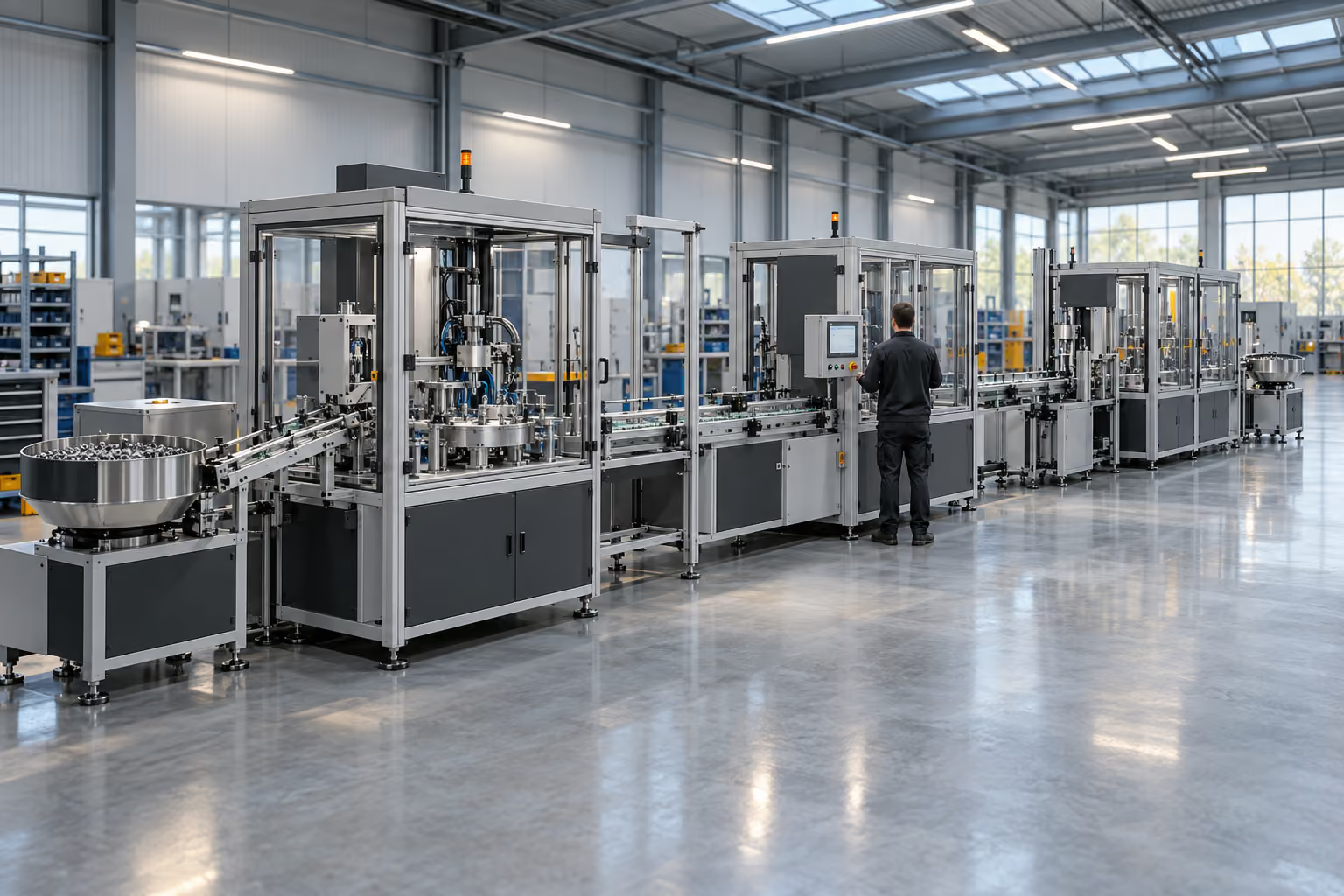
Realization
Build, installation and commissioning at your plant, then handed over ready to run.
Frequently Asked Questions
Can one system combine assembly, machining and robots?
Yes. Hybrid systems combine assembly modules, NC tables and robots. They process different workpieces on one line and can be expanded in stages.
Can different part types share one AC 400?
Yes. Several workpiece types can run on one system, which keeps the investment productive across product families.
Can the AF 400 produce non-cylindrical bores?
Yes. Oval and trumpet-shaped bore profiles are produced with freely programmable geometry. Up to four workpiece types run on one machine without retooling.
Can the AR 400 be converted to a new part?
Yes. Machining units are modular and fixtures are exchangeable. When your part changes, the machine is reconfigured instead of replaced.
Can robotic cells be added to an existing line?
Yes. Cells are self-contained units with their own safety concept. They connect to your existing conveyors and controls and can be installed in stages.
When do you recommend a custom machine?
When no standard platform fits your part, your process or your cycle time. Often these are the processes that set a manufacturer apart from the competition.
Can you add stations to a machine that is already running?
Yes. We extend existing machines with additional stations, processes or capacity. Preparation runs in parallel to production, and installation is scheduled into your planned shutdowns.
Still have questions? Get in touch with our support team and we'll
discuss your unique requirements.
How is every unit verified?
Inspection is part of the process, not a step after it. Each unit is checked in the line, and the result is stored against the part. Nothing moves to the next station without a pass.
What traceability do you provide?
Every part and batch is documented through the process: which station, which parameters, which result. Traceability is configured to your requirements, down to part and batch level.
How do you prove a machine meets spec before it ships?
In a factory acceptance test (FAT) at our plant, with your parts, at full rate. We document output, capability and reject handling. After installation, a site acceptance test (SAT) confirms the same results on your floor.
Still have questions? Get in touch with our support team and we'll
discuss your unique requirements.
What do you need from us to prepare an offer?
Part drawings or CAD data, annual volume, target cycle time, number of variants and your quality requirements. Sample parts help. With this, you receive a technical concept and budget price within two to three weeks.
Can you test our parts before we place an order?
Yes. For critical joining, machining or inspection steps, we run feasibility trials with your sample parts. You see the result before you commit to the machine.
How long does a project take from order to acceptance?
Systems based on our standard platforms typically take six to nine months. Complex lines with machining, assembly and inspection take nine to fourteen months. The binding schedule is part of every offer.
Still have questions? Get in touch with our support team and we'll
discuss your unique requirements.


Process System Technologies
Anton-Grimmer-Straße 4
73466 Lauchheim
Germany


