
Hydraulic Component Assembly & Test
A hydraulic valve fails under full load, in the middle of a field, far from any workshop.
Harvesters and excavators work through dust, heat and peak load. Their hydraulic components operate under demanding pressure, cleanliness and tolerance requirements. A contaminated bore or a missing seal may only become visible once the machine is in the field. We build assembly and test systems that join, torque and seal components under control, then pressure- and leak-test each unit before it ships.
What leaves your plant has already been tested against defined requirements.
From raw body to finished assembly.
One team answers for all of it.
Function Test
Every unit is tested against its specified pressure and leakage profile before it ships.
Cleanliness
Controlled handling and joining keep particles out of bores and seals.
Process Control
Every screw joint is tightened and monitored to its curve. No joint relies on operator feel.
Traceability
Pressure, leak and torque data are stored per serial number for warranty and audits.
We deliver the system.
You operate it.
High Speed Assembly & Inspection Cells
Transfer Solution
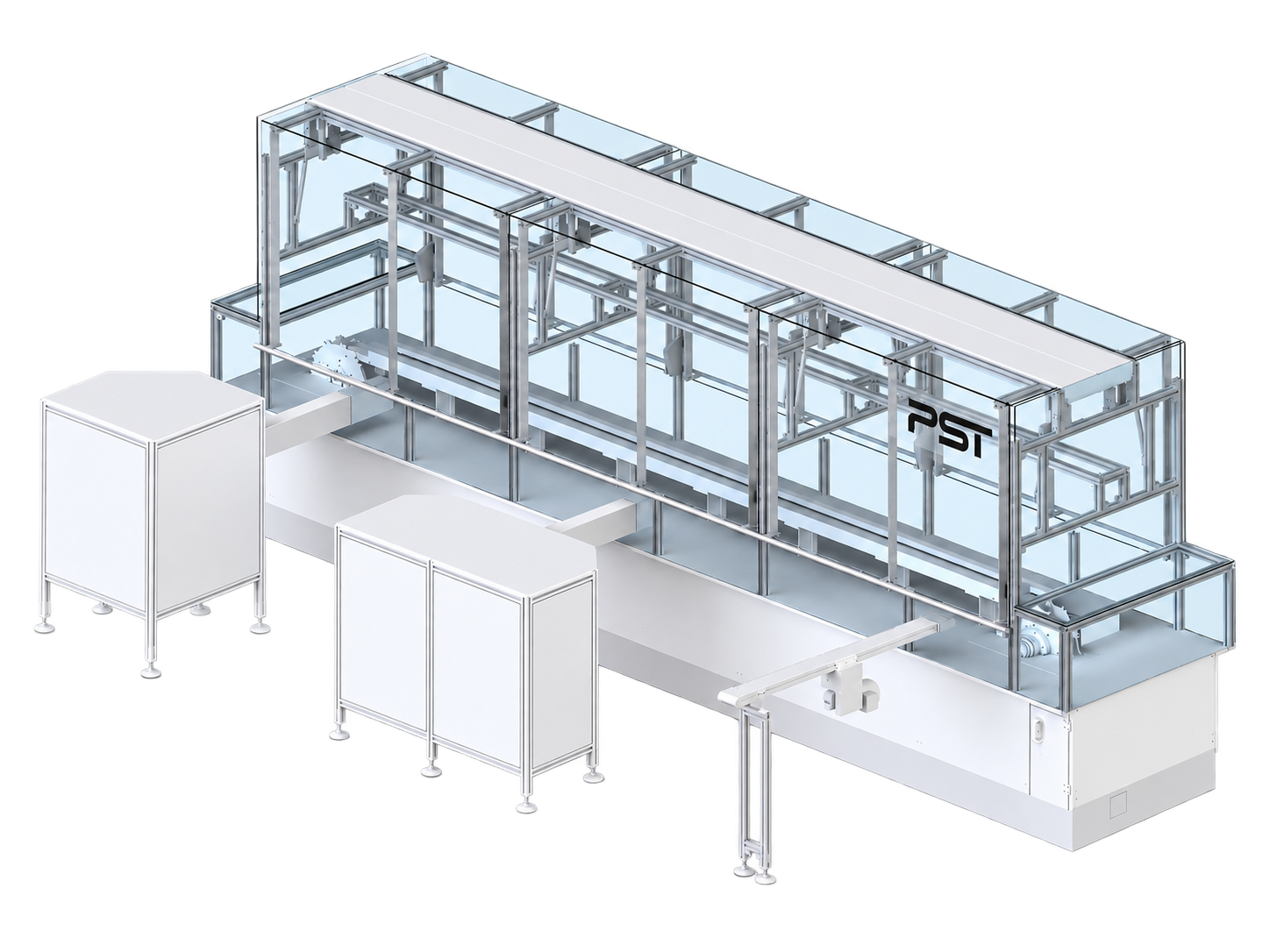
A hydraulic component is joined, torqued, sealed and tested in sequence, and every step depends on the one before it. The Transfer Solution is our linear assembly system for long process chains, on a rugged welded base frame. Station movements and the indexing of the transport chain run in exact synchronization, driven mechanically by hardened cams. Long, demanding assembly sequences need exactly that repeatability. For assemblies with few individual parts there is the compact Modular Solution, for more stations around one central drive OKUMAT.
Discover all High Speed Assembly Systems

Up to 300 parts a minute, and every one of them exactly where it belongs. Explore the high-speed assembly systems that turn many small components into finished products at a pace most lines never reach.

Downloads
We send datasheets and technical documentation on request.
Precision Machining
AF 400 Fine Boring Machine
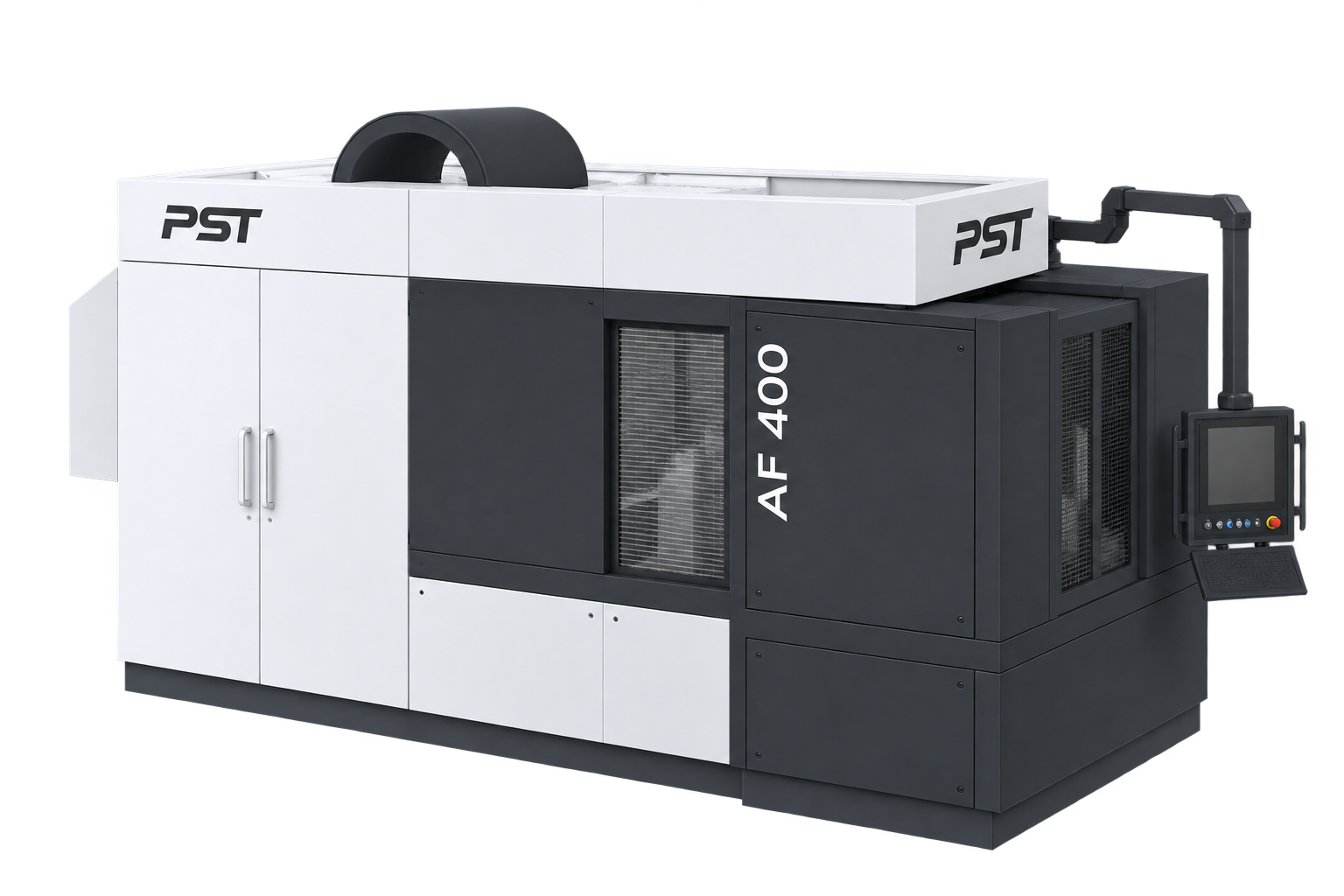
Sealing starts with the bore. The AF 400 handles intermediate and fine boring with tolerances in the micrometer range, and an adjustment device in the boring spindles compensates tool wear. Oval and trumpet-shaped profiles run with freely programmable geometry, and a clamping cube lets you run up to four workpiece types without changeover. For large quantities there is the AR 400 Rotary Transfer Machine, for flexible lots the AC 400 Machining Center.
Discover Precision Machining at PST
Micrometers are not the goal, they are the starting point. Explore the machining systems that hold tolerances bore after bore, from high-volume production to flexible lots, and see how precision becomes routine.
Downloads
We send datasheets and technical documentation on request.
Custom Solutions & Retrofit
System Solutions
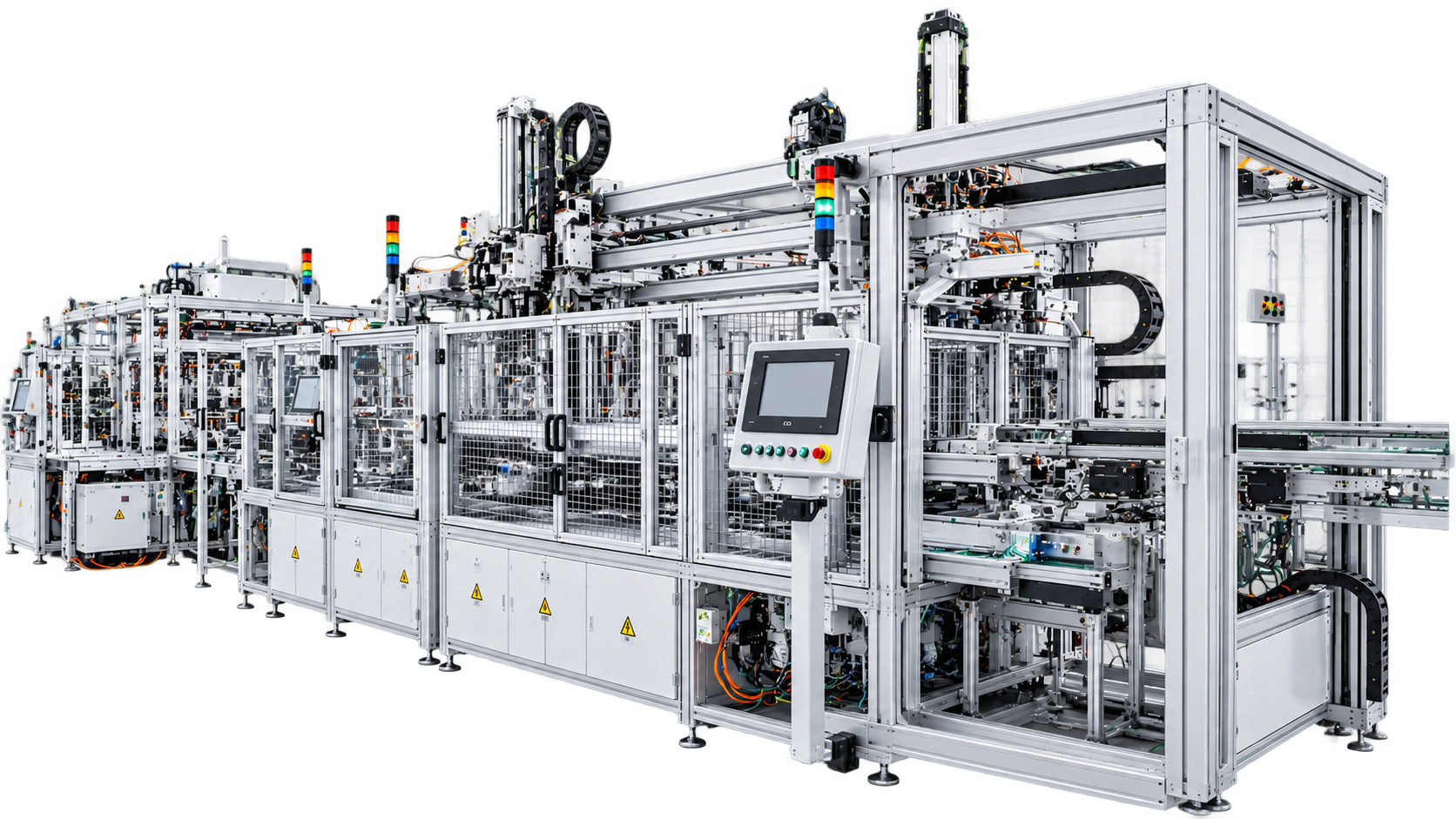
Assembly, test and handling work best as one system, not as three projects. Every machine we build is also available as a turnkey system. Hybrid structures that combine assembly modules, NC tables and robots keep availability high and flexibility wide, and different workpieces can run on the same line. You get one system, delivered ready to run. For a process no standard machine offers, there are Custom Machines.
Discover Custom Solutions & Retrofit
Your process is not in a catalog, and your machine should not be either. Explore how we build, extend and modernize production systems around what you make, from the first sketch to the last shift.
Downloads
We send datasheets and technical documentation on request.
One team from first sketch to a line that runs.
A process that has proven itself. One team plans, engineers and commissions your machine, and hands it over turnkey, ready to run, in the shortest possible time.

Planning
Concept, material flow and scope, defined with you before the first drawing is released.

Engineering
Mechanics, controls and process, designed as one system and simulated before the build.
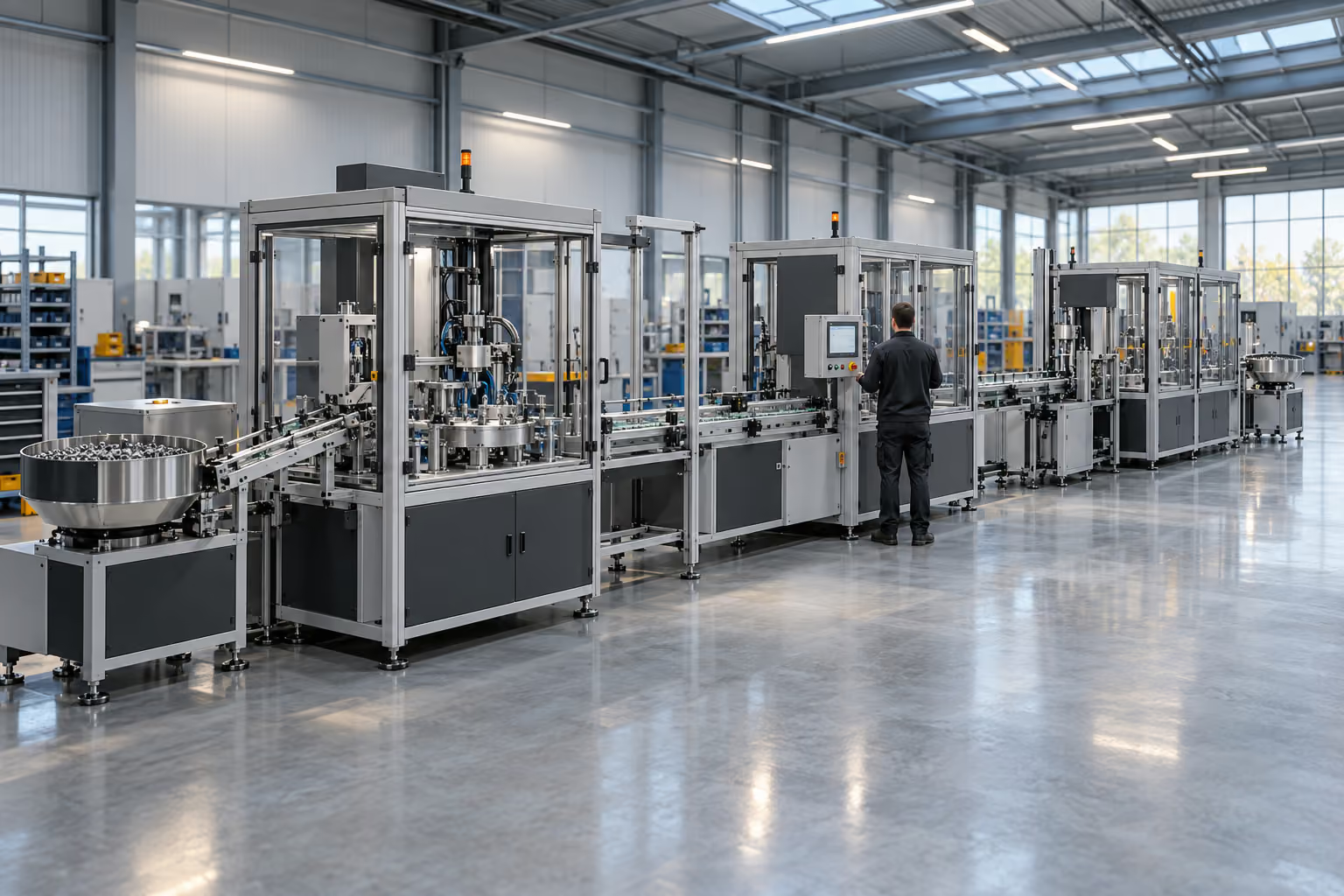
Realization
Build, installation and commissioning at your plant, then handed over ready to run.
Frequently Asked Questions
When is a linear transfer system better than a rotary one?
When the process chain is long, the part is large or many stations are needed. A linear layout gives each station space and access, and leaves room to add steps later.
Which parts suit the AR 400?
Medium-size parts that need several machining operations at high volume: housings, valve bodies, fittings, connecting rods and similar components.
Can one partner handle machining and assembly for the same part?
Yes. We build precision machining and high-speed assembly systems in house. The part moves from raw stock to verified assembly under one engineering team, with one set of interfaces and one contact.
Can you build to our internal machine specifications?
Yes. Your specification sheet, preferred component suppliers and plant standards are part of the design from the first concept. Deviations are agreed in writing before the build, not discovered at acceptance.
Still have questions? Get in touch with our support team and we'll
discuss your unique requirements.
How do the stations of a Transfer Solution stay synchronized?
Station movements and chain indexing are driven mechanically by hardened cams. That coupling delivers the repeatability long assembly sequences require.
Which tolerances can the AF 400 hold?
Bore diameters in the micrometer range, typically within ± 5 µm, with form and position held bore after bore. Non-stacked feed axes and no overhanging masses protect the geometry.
What traceability do you provide?
Every part and batch is documented through the process: which station, which parameters, which result. Traceability is configured to your requirements, down to part and batch level.
How is every unit verified?
Inspection is part of the process, not a step after it. Each unit is checked in the line, and the result is stored against the part. Nothing moves to the next station without a pass.
Still have questions? Get in touch with our support team and we'll
discuss your unique requirements.
Can you test our parts before we place an order?
Yes. For critical joining, machining or inspection steps, we run feasibility trials with your sample parts. You see the result before you commit to the machine.
What does turnkey mean in practice?
One contract, one responsible partner. We deliver the complete system including feeding, safety technology and controls, commission it on your floor and hand it over after acceptance, ready to produce.
What warranty do you provide?
Twelve months from acceptance as standard. Extended warranty terms can be agreed per project.
Still have questions? Get in touch with our support team and we'll
discuss your unique requirements.


Process System Technologies
Anton-Grimmer-Straße 4
73466 Lauchheim
Germany


