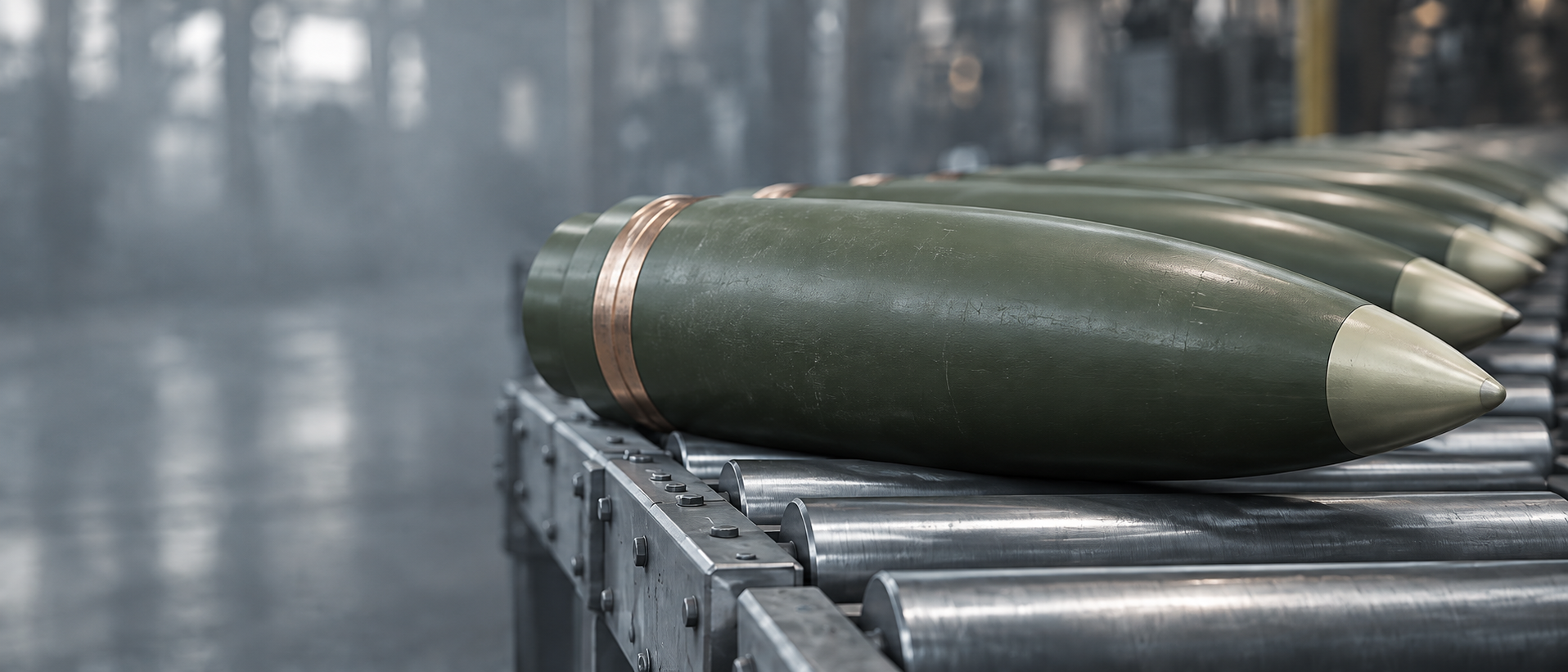
Large-Caliber Ammunition Production
A shell body that misses spec doesn't slow a line down. It stops everything behind it.
Europe has expanded its 155 mm production capacity significantly since 2022, making upstream component supply increasingly critical. When machined bodies arrive late or out of tolerance, filling, assembly and acceptance sit idle, no matter how much downstream capacity is available. We build the machining, assembly and inspection systems that keep that chain moving: dimensional accuracy from the first part, every step traceable to its lot, and more output within the floor space you already have.
From raw body to finished assembly.
One team answers for all of it.
Conformity
Tolerances are built into the process, not sorted out at final inspection. The thousandth body runs like the first article.
Traceability
Every machining and assembly step is logged against its lot. When acceptance asks, the record is already there.
Capacity
More output from lines that are already qualified. We extend and modernize what runs instead of waiting years for what doesn't.
Single Source
Machining, assembly and inspection from one engineering team. One contact from the first offer to the last spare part.
We deliver the system.
You operate it.
High Speed Assembly & Inspection Cells
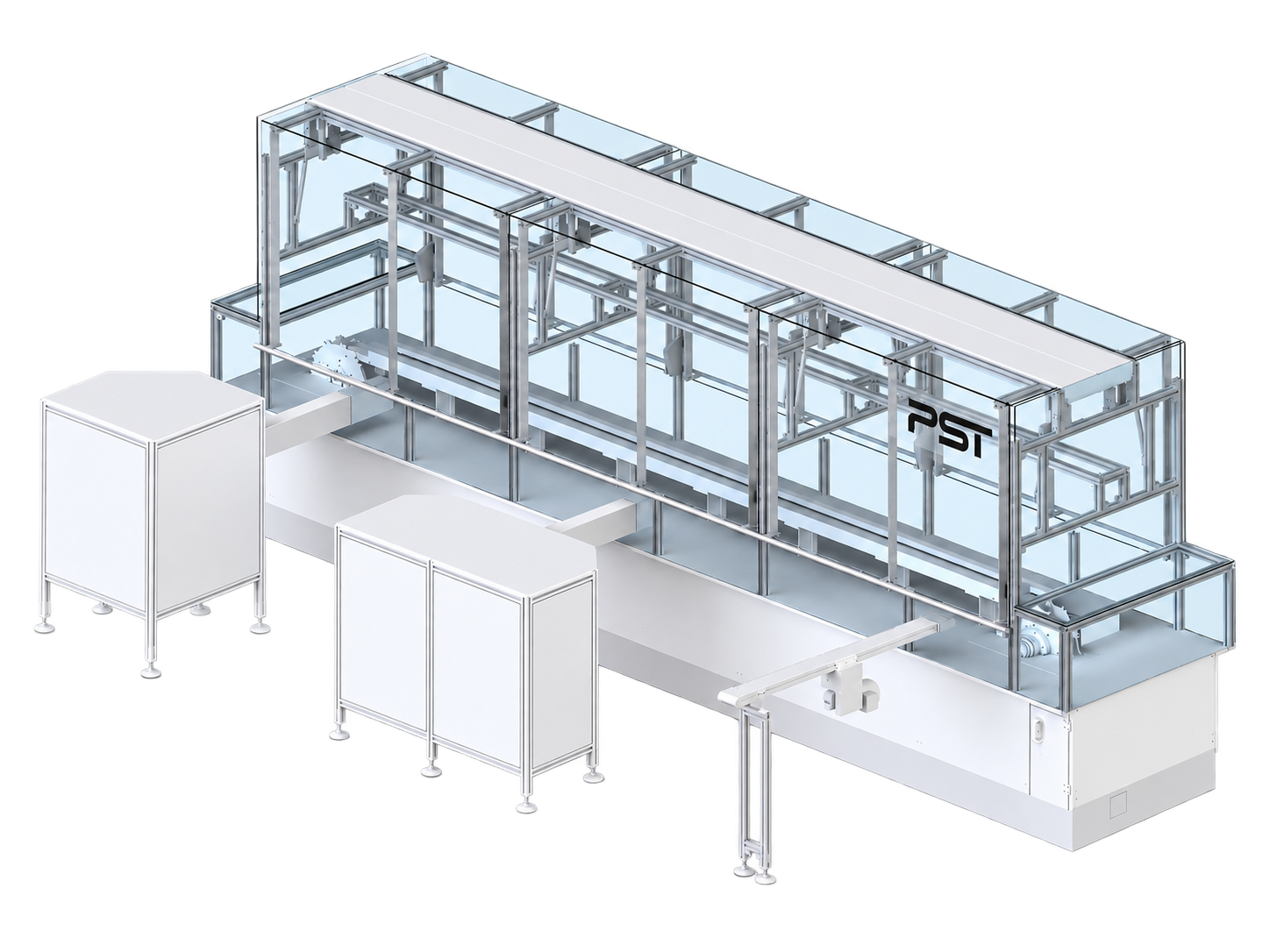
Transfer Solution
Large components need a stable base. The Transfer Solution is our linear assembly system for long process chains, built on a rugged welded base frame. Station movements and chain indexing run in exact synchronization, driven mechanically by hardened cams, which gives long, demanding assembly sequences the repeatability they require. For assemblies with few individual parts there is the compact Modular Solution, for more stations around one central drive OKUMAT.
Discover all High Speed Assembly Systems

Up to 300 parts a minute, and every one of them exactly where it belongs. Explore the high-speed assembly systems that turn many small components into finished products at a pace most lines never reach.

Downloads
We send datasheets and technical documentation on request.
Precision Machining
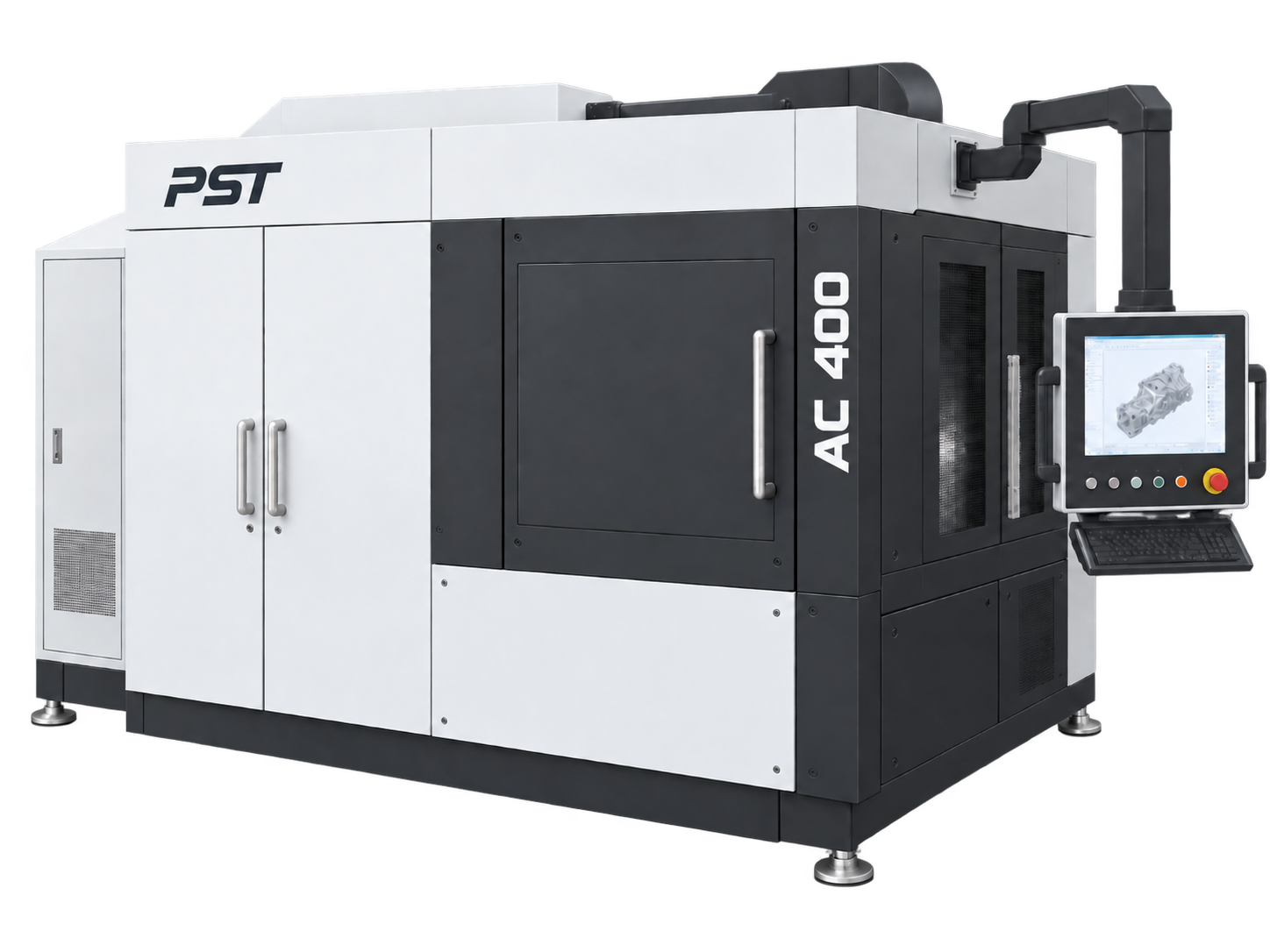
AC 400 Machining Center
Large parts, tight tolerances, and a chain that waits for every body. The AC 400 pairs the flexibility of a machining center with the economics of a specialized machine. It carries 2, 3, 4 or 5 motor spindles with automatic tool change and a tool magazine, and several workpiece types can share one system. Options include spindles with NC facing and additional spindle rows. For fine bores there is the AF 400 Fine Boring Machine, for large quantities the AR 400 Rotary Transfer Machine.
Discover Precision Machining at PST
Micrometers are not the goal, they are the starting point. Explore the machining systems that hold tolerances bore after bore, from high-volume production to flexible lots, and see how precision becomes routine.
Downloads
We send datasheets and technical documentation on request.
Custom Solutions & Retrofit
System Upgrades
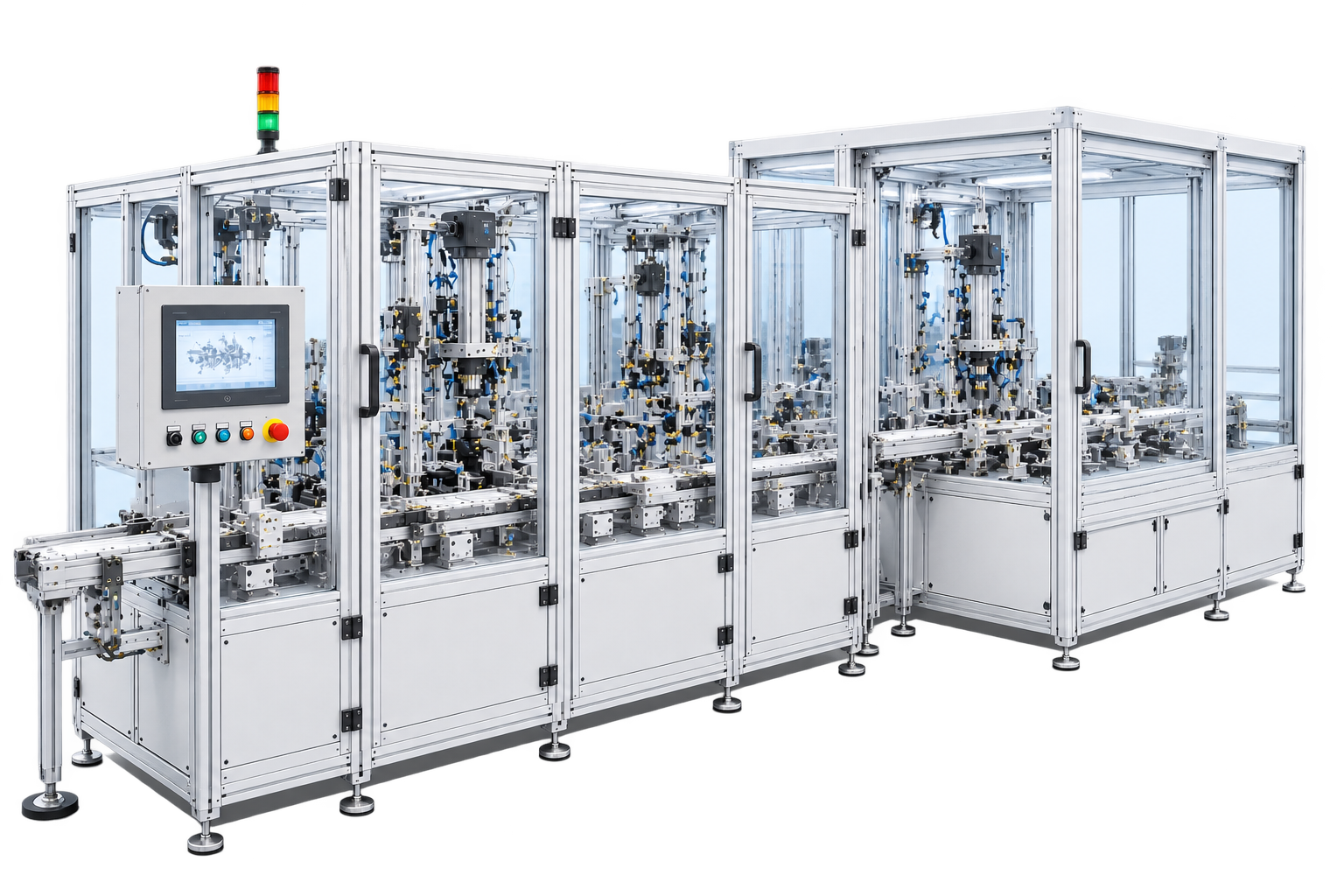
Extending a line that already runs is faster than waiting for one that does not exist yet. System Upgrades add stations, processes or capacity to existing machines when you need it: new products, higher volumes, changed process steps. You stay flexible without investing in an entirely new system. If the control is what holds the line back, there are System Retrofits.
Discover Custom Solutions & Retrofit
Your process is not in a catalog, and your machine should not be either. Explore how we build, extend and modernize production systems around what you make, from the first sketch to the last shift.
Downloads
We send datasheets and technical documentation on request.
One team from first sketch to a line that runs.
A process that has proven itself. One team plans, engineers and commissions your machine, and hands it over turnkey, ready to run, in the shortest possible time.

Planning
Concept, material flow and scope, defined with you before the first drawing is released.

Engineering
Mechanics, controls and process, designed as one system and simulated before the build.
Realization
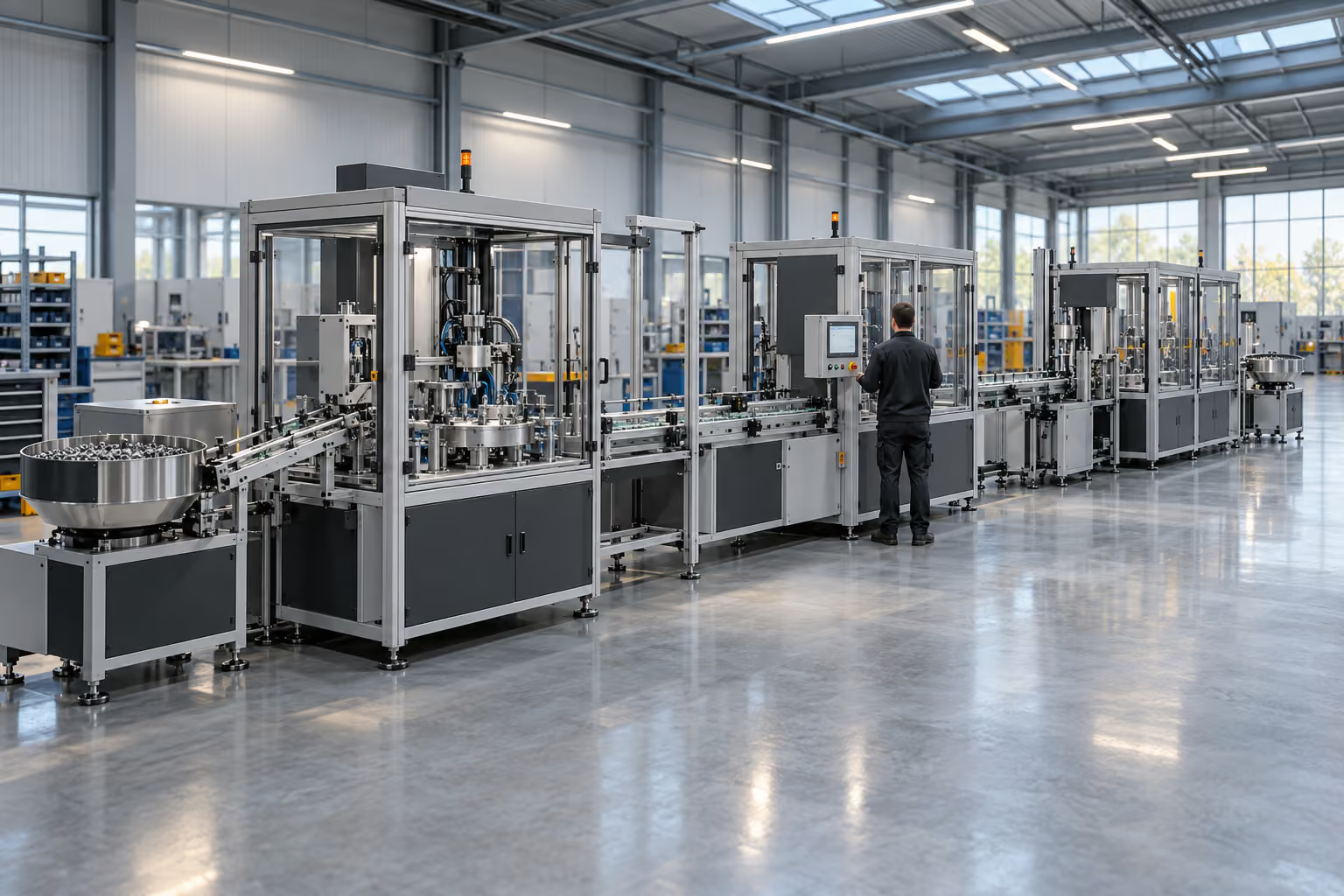
Build, installation and commissioning at your plant, then handed over ready to run.
Frequently Asked Questions
Can you integrate new systems into an existing line?
Yes. Our customers already run highly developed production, so we modernize and extend it. We add capacity and new stations without replacing the whole line. Scope is defined per project during planning.
Which processes do you cover?
We build high-speed assembly systems and precision machining systems, with inspection and test integrated into the line. One partner for the full chain, from raw stock to the verified finished part.
What do your robotic cells do?
They handle and assemble heavy, safety-critical parts where precision and protection matter more than speed. A typical application is the assembly of artillery projectiles.
Can the cells handle the weight of large-caliber projectiles?
Yes. A 155 mm projectile weighs around 47 kg. Our cells use industrial robots with payload reserves well above that, gripper included, so parts are moved safely and precisely.
Still have questions? Get in touch with our support team and we'll
discuss your unique requirements.
How is every unit verified?
Inspection is part of the process, not a step after it. Each unit is checked in the line, and the result is stored against the part. Nothing moves to the next station without a pass.
What traceability do you provide?
Every part and batch is documented through the process: which station, which parameters, which result. Traceability is configured to your requirements, down to part and batch level.
Which process capability do you design for?
Critical features are designed for a machine capability index (Cmk) of 1.67 or higher. We prove it in a documented capability study with your parts before the machine ships. Process capability (Cpk of 1.33 or higher) is then confirmed in series production on your floor.
Still have questions? Get in touch with our support team and we'll
discuss your unique requirements.
How does a project run from first request to acceptance?
Planning, engineering, realization, service. We define requirements and scope up front, build and test the system, and hand it over with acceptance testing. Timelines depend on the system and are agreed per project.
What happens after delivery?
Service continues after commissioning: support, spare parts, and upgrades to existing systems. Scope is agreed per system.
Can you test our parts before we place an order?
Yes. For critical joining, machining or inspection steps, we run feasibility trials with your sample parts. You see the result before you commit to the machine.
Still have questions? Get in touch with our support team and we'll
discuss your unique requirements.


Process System Technologies
Anton-Grimmer-Straße 4
73466 Lauchheim
Germany


